
What the indie K-electronic scene has in store for Korea and the US.
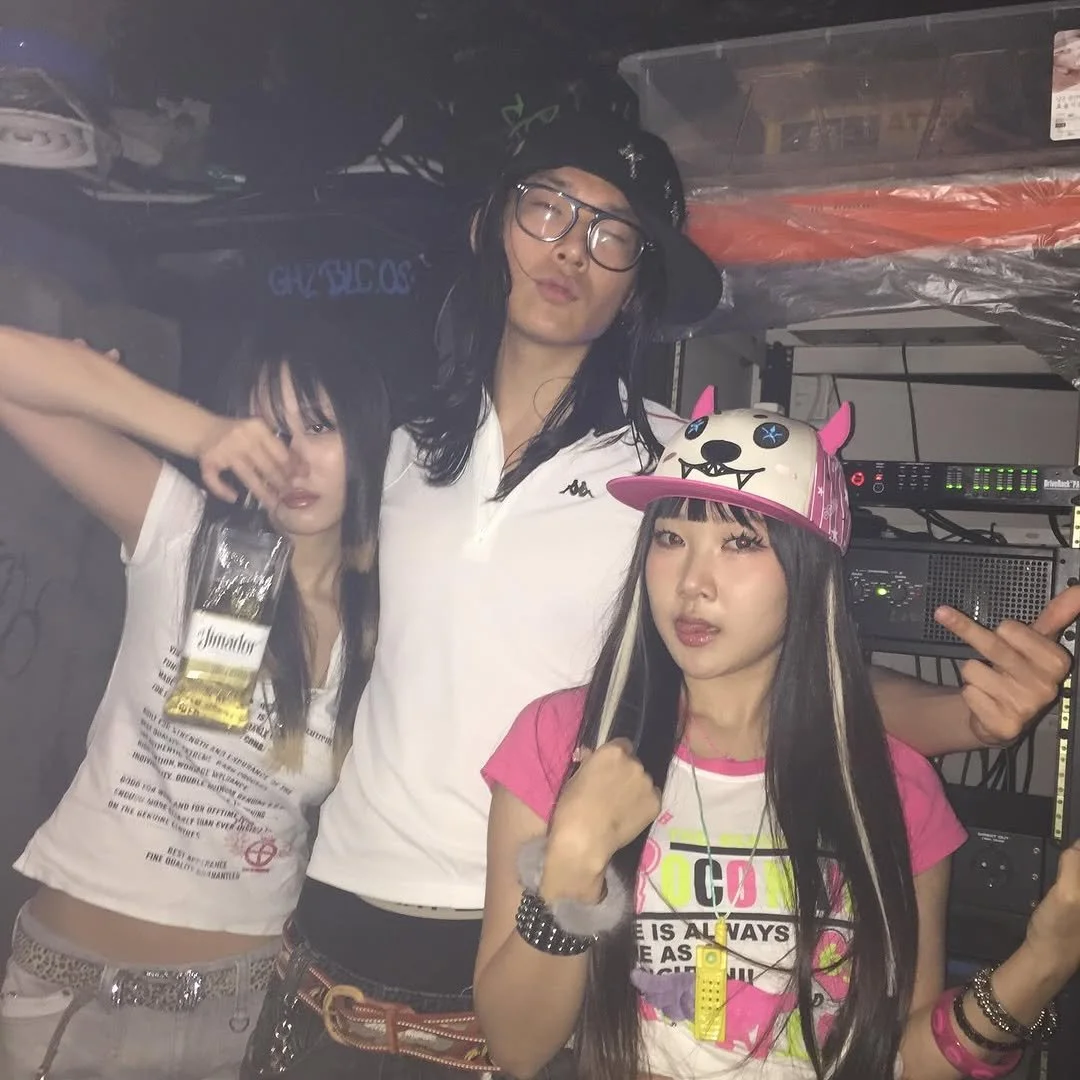
photo from @my.unnies (Instagram).
In the United States, South Korean music is frequently associated with the K-pop industry. Equipped with corporate-manufactured personas, K-pop artists often operate with the backing of large companies and producers who coordinate their every move. However, behind a lineup of well-known K-pop bands are indie artists creating bold, genre-bending music. The K-electronic music scene offers a goldmine of refreshing sounds made by self-produced artists who don't fit the mold. They challenge the massively commercialized K-pop scene and invite the western electronic music space to take a closer look.
kimj
Hailing from Busan, producer kimj is a leader of the K-electronic scene. He has worked with American rap and electronic artists like NBA Youngboy, 2hollis, and Glaive, and on the side, he releases his own music. His work is reminiscent of Skrillex’s classic dubstep sound but with a hyperpop-electroclash flair. His 2025 album KOREAN AMERICAN blends these influences on back-to-back bangers laced with abrasive FX and an armory of synths.
“DRAGON BURP,” one of the strongest tracks on the album, is a variation on Skrillex’s dubstep blueprint, complete with a womp-womp bass drop, oscillating synths, and meticulously chopped vocals. Traces of the vocal sample from “Scary Monsters and Nice Sprites” can be heard in the background to acknowledge the influence. This track steps away from the radio-friendly, commercial sound of classic K-pop, feeling more appropriate for an underground rave. “1-800-FUCKOFF” marks a successful collaboration with PC Music producer umru and electronic-pop artist underscores. The track expertly combines all three artists’ producing styles, with metallic, distorted percussion crunching beneath playful synths and pop melodies. This links kimj to the American hyperpop space and introduces his style to fans of the other two artists. On “#chinesekorean” kimj collaborates with Chinese rapper jackzebra and Chinese artist SEBii, introducing a hyperpop-hip-hop element to the album—but, of course, not without the whomping synths in the beat drop. The album, while cohesive, boasts kimj’s versatile producing abilities. He combines western EDM influences with Korean lyrics, creating a space for Korean and Asian electronic artists while challenging the reputation of K-pop.
The Deep
One of kimj’s frequent collaborators is indie singer-songwriter The Deep, known for her Y2K-inspired hyperpop. Her sound can be described as a mix of PinkPantheress, Dorian Electra, and Frost Children with a hint of ARTPOP-era Lady Gaga. With a bleach-blonde side part, fuzzy boots, and neon bikini tops, her aesthetic harkens back to the bold, obscenely neon early-2010s party scene. She stands out against Korea’s generally conservative style with both her look and her music.
The Deep released her debut studio album KPOP BITCH in 2025. Lead single “KPOP BITCH,” produced by Frost Children incorporates the producers’ well-known party-pop-meets-hyperpop sound. The song challenges and inverts the K-pop artist image, incorporating trashy party aesthetics. She expresses creative ambition and not letting her unconventional style keep her small. A line in the first verse translates to “Korea couldn’t handle me, so I escaped to the USA,” followed by “There’s something different underground,” which points to her ahead-of-the-trend vision. She repeats “I wanna blow it up, turn it into something” in the chorus to emphasize her mission of finding success with the sound she loves and staying true to her vision. The bridge translates to “K-pop bitch is coming/She's different, moving like she's flying.” The song becomes a declaration and a warning—neither Korea’s nor the USA’s music scenes are prepared for what she has to offer.
Sonically, the album combines EDM and fun, girly pop influences. “Wrong Number” forefronts ARTPOP’s influence, with a strong, bouncy bassline, pulsing synths, and an intense buildup to a vocally distorted chorus. “Lucky Star” takes on more of a classic hyperpop sound like that of Dorian Electra, who unsurprisingly worked on the song. It features heavy kicks looping beneath repetitive plucked synths and vocal chops. This sound, far less common in Korea, allows her to break the mold of a K-pop artist. She establishes herself as a pop music misfit and embraces a messy, authentic party girl aesthetic.
Effie
Not unlike The Deep, singer and rapper Effie draws from hyperpop and EDM influences. She was inspired to become a musician after listening to Bladee and Ecco2K’s “Vanilla Sky,” which explains her heavy use of autotune and her style that blends vocals and rap. She released her first album E (paying homage to Ecco2K’s album of the same title) in 2025, followed by an EP titled pullup to busan 4 morE hypEr summEr it’s gonna be a fuckin moviE.
“MAKGEOLLI BANGER,” a standout track produced by kimj, explodes with energy as nostalgic chord progressions build upon sweeping sine waves. Effie’s voice glides soft and high yet declarative as the song builds up to a somewhat melodic-bass-like chorus. “I do the dash, I feel like yung lеan not sorry for my sins” she sings, followed by “Oh I changed Seoul, I did it again.” The title refers to a sparkling rice wine and incorporates Korean culture and references into a unique rap and hyperpop blend.
The opening track, “MORE HYPER,” seems to draw inspiration from the late-2010s SOPHIE and 100 gecs hyperpop sound with high-pitched, processed vocals and punchy, metallic basses that threaten to explode from the speakers. “2025기침” is arguably one of the more experimental tracks with distorted synths and industrial effects growling behind Effie’s heavily autotuned rapping. Like The Deep, her experimental, self-made style embraces her personal musical interests and refuses to stay within the formulaic confines of k-pop.
The three artists, Kimj, Effie, and The Deep, come together on the track “MY UNNIES” with rapper SEBii, a song about having fun with friends and dancing. The production is reminiscent of AG Cook, combining whimsical synths with aggressive sine waves that I now recognize as a marker of kimj’s work. The title, meaning “my sisters,” solidifies a sense of community between the artists. “So bright you will shine" they repeat. “Do you think about us?” It’s a declaration of their dedication to the unique style of music and combines all three artists’ flairs: kimj’s synth-heavy drops, Effie’s sweet vocal-rap moments, and The Deep’s bedroom-pop/hyperpop crossover. This track establishes the indie K-electronic microgenre and its aims to disturb the k-pop scene and celebrate their pop rebellion.
As a Korean hyperpop and EDM fan, I’m thrilled to watch these artists take up space in the electronic music world. Despite Korea’s conformist culture and bans on explicit songs, these artists serve as a reminder that some artists are actively trying to break out of the mold and pave their own path. Through their work with western hyperpop artists and pushes for the US spotlight, I hope to see them grow and make space for Korean voices and culture in the electronic community.
edited by Celeste Alcalay.
photo from @my.unnies (Instagram).
