
Leith Ross’s performance at Thalia Hall was an intimate night of hope and reflection, looking forward to a brighter and more liberatory future.
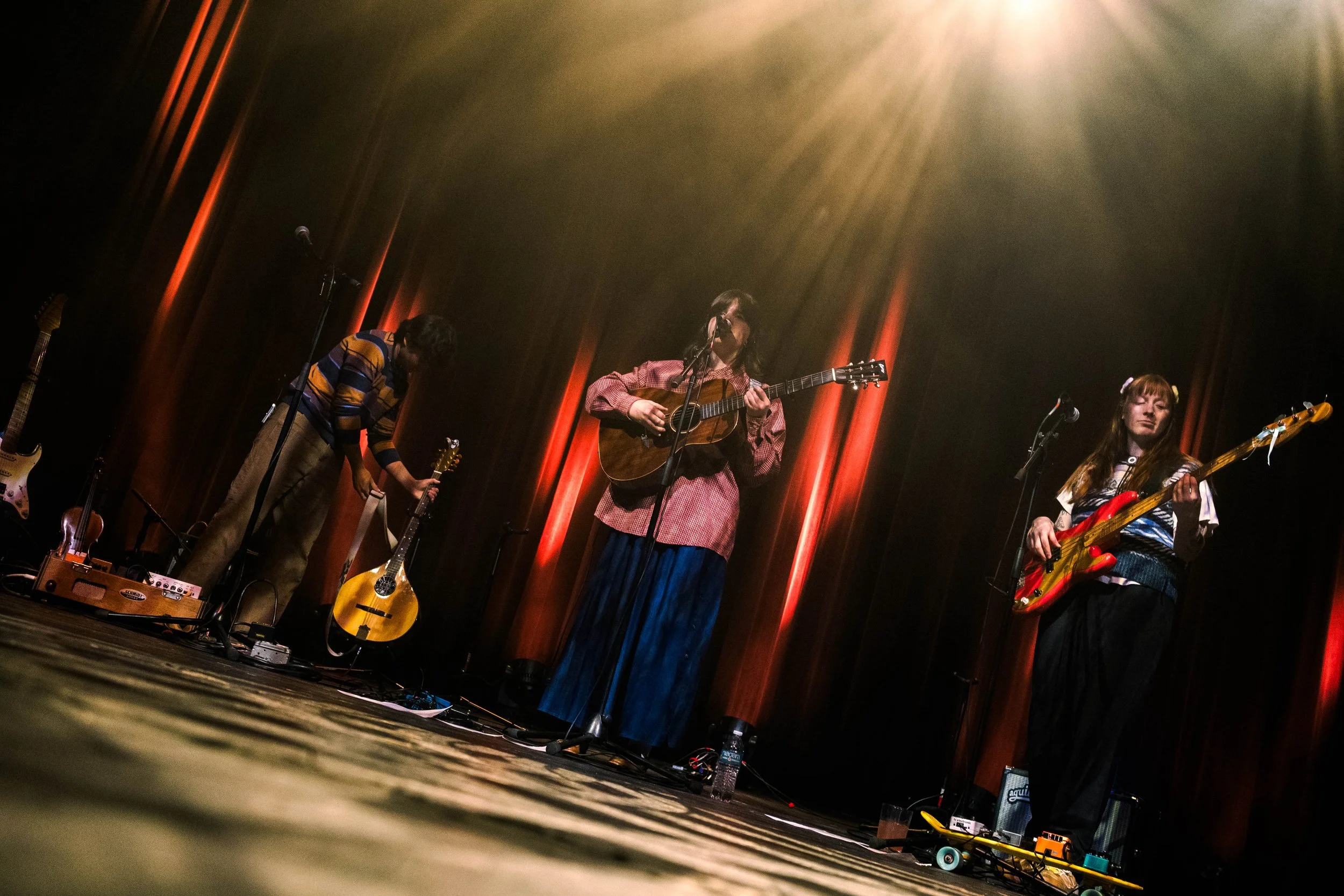
photography by Olin Nafziger
On Saturday, October 25th, hundreds of Gen-Zers, wearing an uncommunicated yet nearly universal uniform of Doc Martens, oversized button downs, and flowy skirts, filed into Thalia Hall to see Leith Ross play their largest Chicago headline show yet.
The night’s setlist consisted almost entirely of Ross’s third album, I Can See The Future, released just over a month earlier on September 19th. But parts of the show also called back to some of their older hits, including the 2021 single “I’d Have to Think About It,” a heartbreaking ballad about a love the artist may never be able to replicate. While Ross introduced this song (and many others) with a bit of a giggle, the sharp, repetitive lyrics cut straight to the hearts of an emotionally vulnerable audience.

Much of the show also overtly reflected Ross’s personal journey of growth and discovery. They made several awkward yet endearing quips confessing their own personal goals—including spending more time on stage without hiding behind a guitar—to the crowd. They also opened up about their political journey—what they described as pretty serious “radicalization.” At one point, Ross took a break from the music to make an impassioned speech about the ICE presence in Chicago and their personal belief in the radical power of community.
Ross played alongside a band of four: a drummer, a keyboardist, a guitarist, and a bass player who also sported a fiddle. The band’s full and luscious sound, precise harmonies, and general cohesion truly elevated the live music experience. It wasn’t just Ross who was the star of the show—the band certainly was too.

While I Can See the Future might be more sonically advanced than Ross’s previous works—incorporating pop influences that result in a more electronic and upbeat sound—the crowd also clearly appreciated the simpler acoustic songs, singing along loudest and reacting most viscerally to Ross’s signature melancholic queer yearning tracks.
One special highlight of the show was a fan project organized during “Home” in which the crowd held up paper cutouts of houses (which had been passed out early down the winding line outside the venue) to their phone flashlights. In a tender moment, the singer burst into tears, professing their love for the city of Chicago.
The set closed with Ross’s biggest hits: “You On My Arm” and an encore consisting of “We’ll Never Have Sex.” Looking around as Ross sang, the room was filled with love, vulnerability, and friendship—a group of strangers brought together by a communal hope for a brighter future.


Emma Harner opened for Ross.


