
They are Jazzing a Body of Shoegaze?
Pennsylvania-based bands fib and They Are Gutting a Body of Water’s improvisation, electronic samples, and polyrhythms clash with West Coast shoegaze’s nu-metal practices.
photos taken by Mimi Mikhailov
Nestled in Wicker Park, the Subterranean—a narrow, three-story venue with sharp staircases and biblical papier-mâché sculptures—was a perfect setting for the shoegaze enigma They Are Gutting a Body of Water (aka TAGABOW). Looking up from our vantage point for the evening, we could see faces, golden from the light of a low chandelier, staring down like angels as we milled about the blue-lit checkerboard floor.
Openers Guitar and fib played pedal-tapped indie rock. Genre this, genre that, you could have called it anything from shoegaze to alt rock—anyone would have believed you, and nobody would have really cared. I initially believed fib to be purely shoegaze, but their Spotify bio presents them as otherwise: punk-fueled and genre-transgressive. This actually makes sense. Fib lacked the lack of clarity that most shoegaze bands have; it was easy to hear which instrument played which part, and every note played was crisp and clear. My show companion, a jazz guitarist and overall music nerd, pointed out to me that fib played in an array of repeatedly switching and odd time signatures. Impressively, drummer Charlie Libby Watt was able to incorporate improvised drum fills effortlessly into the ebbing and flowing rhythm.
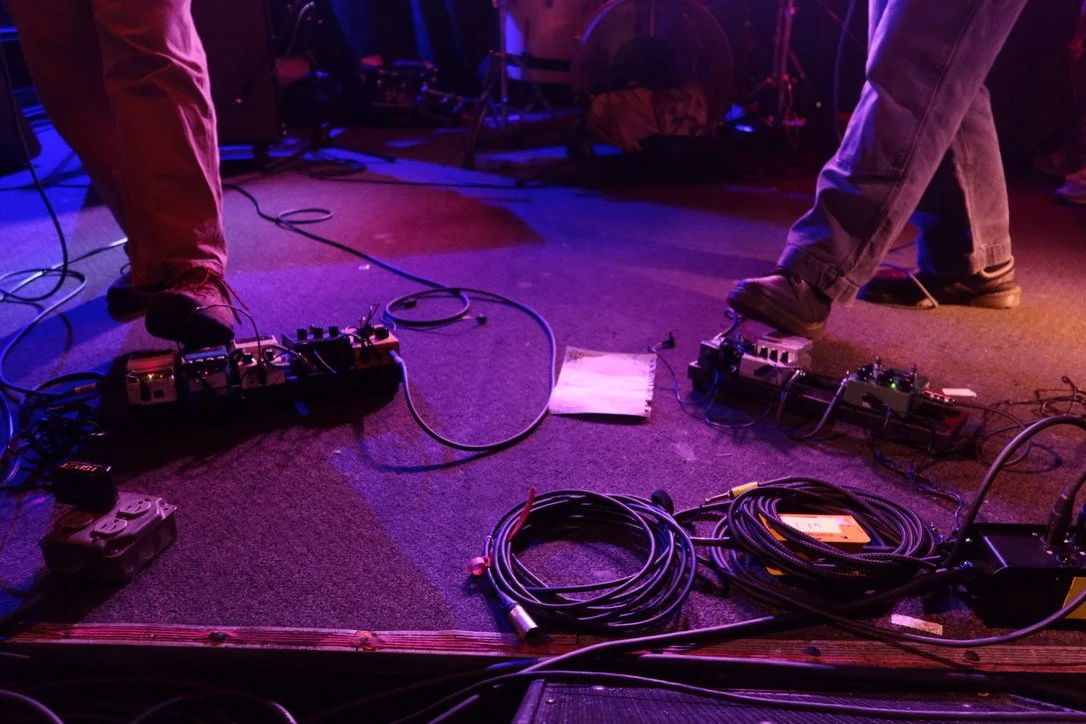
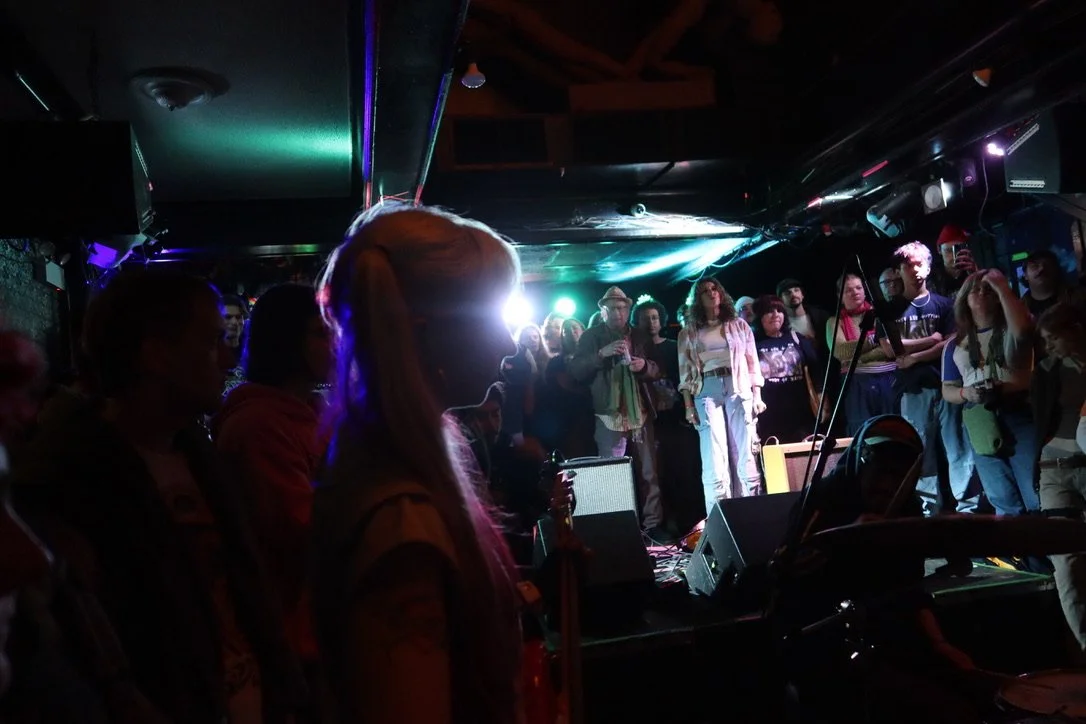
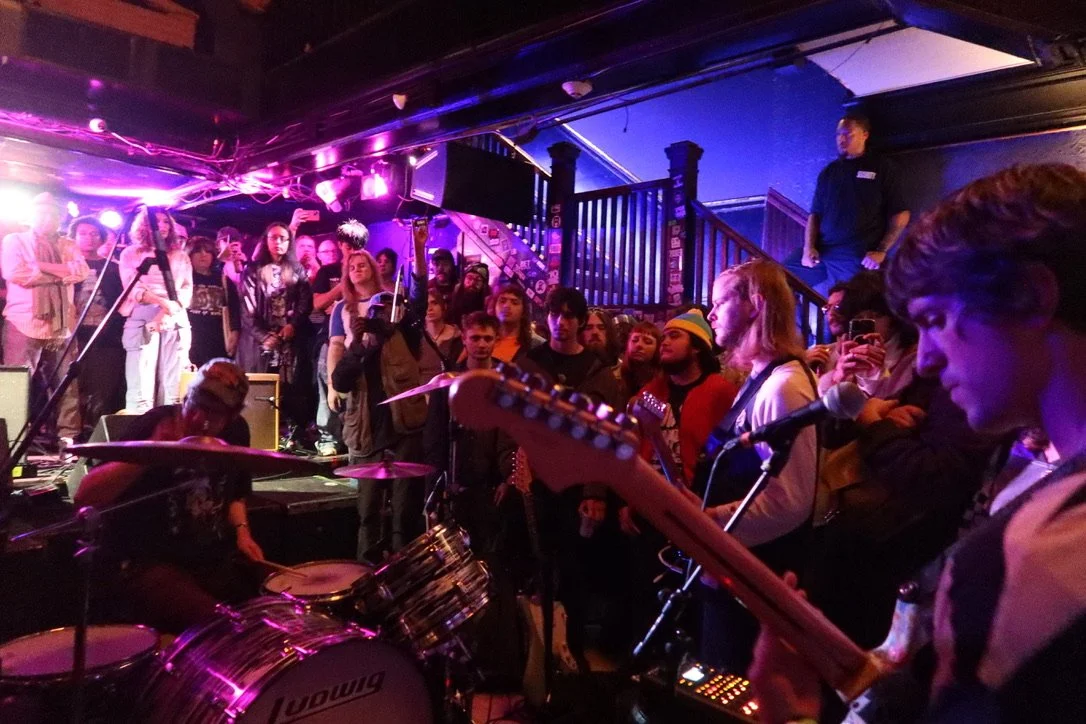
After fib’s set concluded, we were frantically pushed back by security. Puzzled and panicked, we watched as venue staff pulled cables, pedals, and a whole drum set onto the floor we had just been standing on. Amps were pulled close to the stage and stacked ominously tall; the lights dimmed again and TAGABOW took stage, albeit on the floor, in a circle, facing each other. With a nod, their funky electronic sound filled the space.
As the audience filled up, many people opted to stand on the stage where TAGABOW “should” have been performing. This created a fascinating community experience—we watched not just the band, but also our fellow audience members behind them. Engaging with both live music and with other people reacting to it is a rare experience these days. Traditional stage setups and fans frantically prioritizing being up front creates isolating concert experiences where you may be surrounded by fellow fans but aren’t challenged to engage with them (as one might at a dance party or even punk mosh pits). So I appreciated the effort TAGABOW made to create this communal setup—a circular arrangement which allowed us to watch not only the band, but also our fellow audience members as they nodded their heads, moshed, and murmured with those around them.
TAGABOW’s sound is noticeably unique in the shoegaze genre, incorporating many electronic samples and warped pitches. While they might seem to deviate from the genre, they find their way back to its conventions with a full, muddied sound that becomes even more instrumentally ambiguous because of the use of samplers. So while their instrumentation might have deviated, the construction of their songs—heavy and repetitive—is true to the very core of shoegaze. My companion once again alerted me to something I wouldn’t have noticed otherwise: TAGABOW seemed to be improvising parts of their set. Nothing comparable to jazz, but notable given shoegaze is a genre that doesn’t typically incorporate improvisation. And TAGABOW’s willingness to improvise opened them up to the ability to use their instruments to replicate the samples used in their recordings. It’s fascinating to watch musicians perform live on their instruments in ways you don’t get to hear when listening to a record; in this case, it was the artful replication of computerized and sampled electronic sounds using analog instruments.
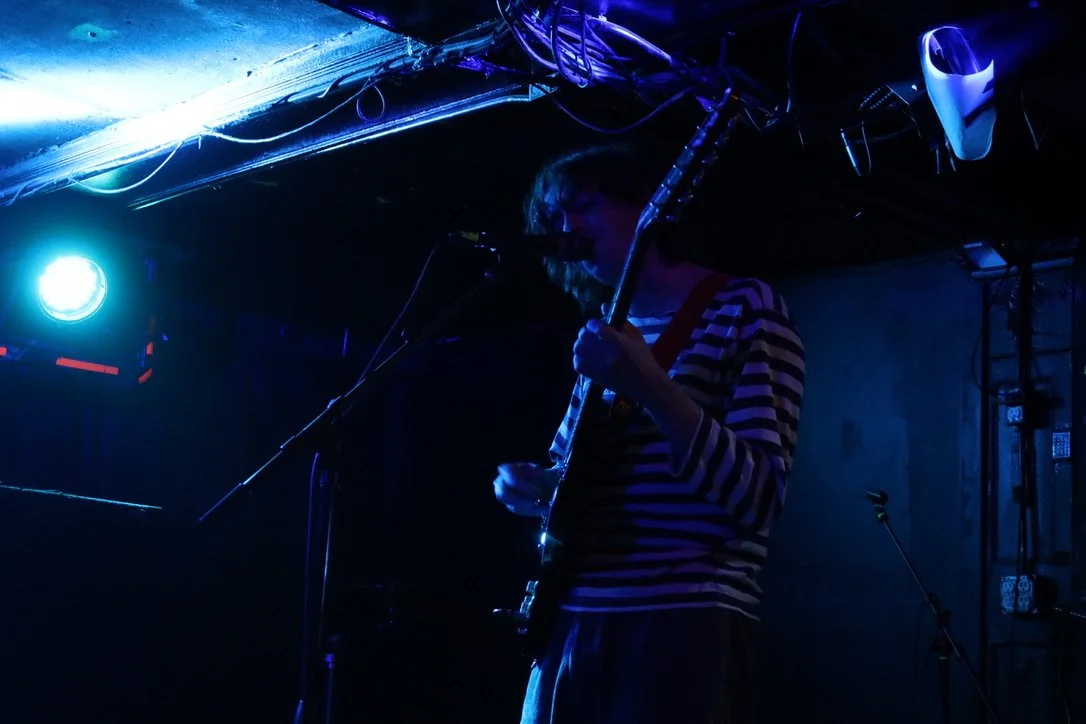
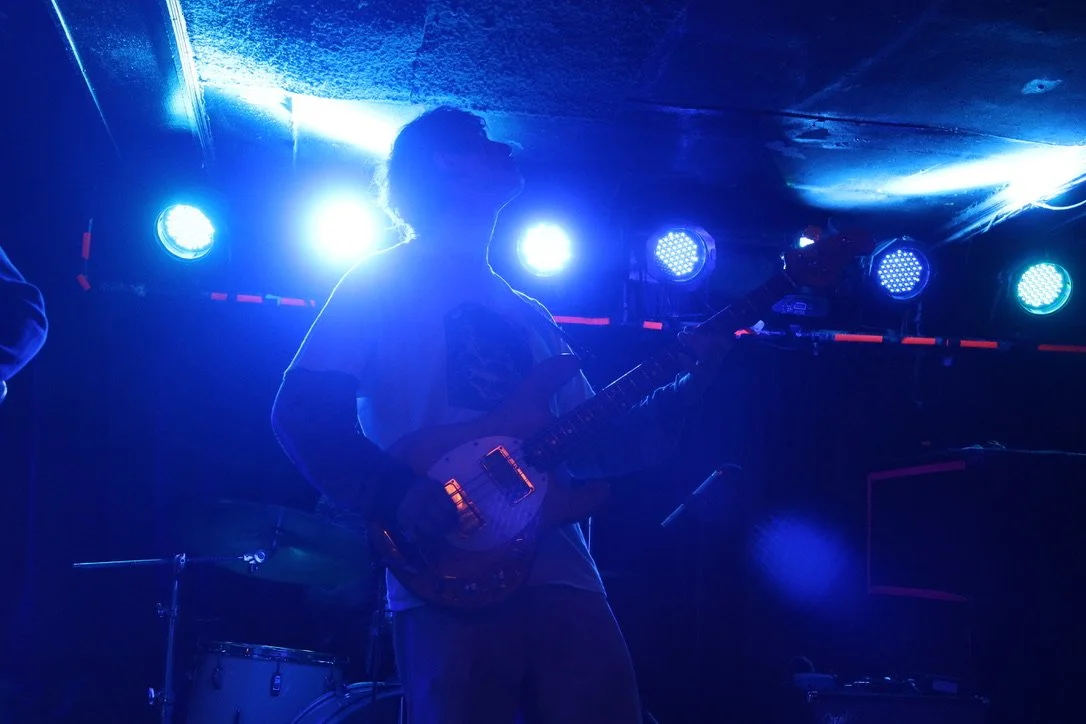
I left the show reminded of one of my favorite shoegaze bands: Her New Knife. The sharp electronic samples TAGABOW used reminded me of the sour guitars on my favorite Her New Knife's songs. For fun, knowing both bands were from Pennsylvania, I looked up Her New Knife and found the record label they are signed to: Julia’s War. Clicking through the label’s website, I was pleasantly surprised by my investigative skills. You know who else is signed to Julia’s War? Guitar, fib, and TAGABOW! In fact, Julia’s War was started by TAGABOW’s guitarist and original member, Douglas Dulgarian. The pieces started falling into place.
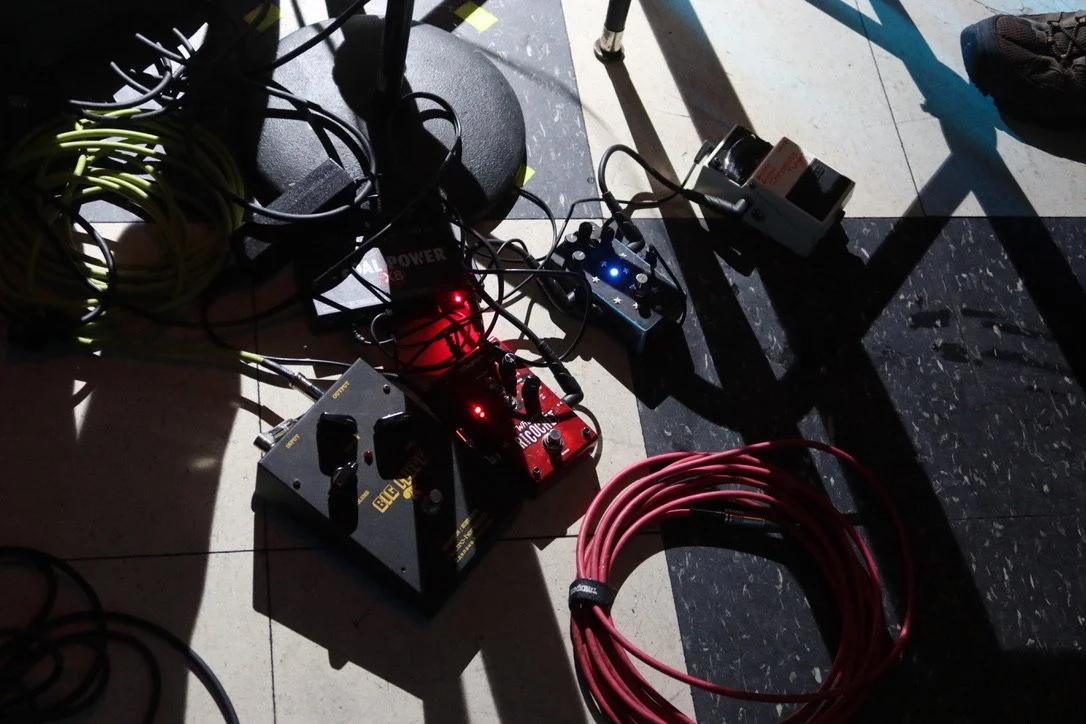
Shoegaze is big on the West Coast. 2010’s classics like Whirr and Nothing, modern mainstays like julie, and recent comeups like Wisp and Midrift dominate the sonic scene. While a heavy, nu-metal sound drives the West Coast (even as far as Texas, with Glixen and Trauma Ray), the East Coast seems to steer opposite. TAGABOW and Her New Knife, specifically, lead with a tinkling, experimental electronic sound. Fib and Toronto-based 9million find themselves even further beyond the shoegaze zeitgeist with their clear vocals and instrumentation.
Perhaps I should have explained earlier. Shoegaze, originating in the UK, was first coined as “shoegazing” (i.e. to shoegaze, to gaze at one’s feet), due to the frequent use of numerous pedals by musicians in the scene. Drawing from the Cocteau Twins and other gothic post-punk, shoegazers sought to create an overwhelming yet ethereal sound where instruments, including vocals, were indistinguishable. My Bloody Valentine is one of the most beloved and remembered acts of the original scene and served as inspiration for the late-2000’s revival.
Curiously, less than a decade after the initial 2000s revival, the 2020s saw another one. Sometimes referred to as “nu-gaze,” this new shoegaze took Deftones as its muse and incorporated many nu-metal and hardcore sounds, especially on records by West Coast artists. Being a derivative of a derivative, reviving a revival, many 2020s shoegazes “acts” (if you could even call one-man bedroom laptop acts such) have already faded into obscurity for their lackluster recreations and computerized guitar loops (think all those artists on Spotify’s “Shoegaze Now” playlist you’ve never heard of and will never hear of again). Those who haven’t yet faded into obscurity still seem to be suffering from repetition and derivation. Not TAGABOW and the East Coasters though. With a trailblazing sound that incorporates outside references and experimentation, they might just be pulling shoegaze out of its infinite fractal of references.
To play devil’s advocate, if shoegaze seems to be running itself in the ground (nu-gaze revivalists) and floating away at the same time (experimental anti-genre-ists), is there a point in saving it? Does the genre really exist at all? How do we define genre in the first place: by community or by sound? Shoegaze seems to be ripping at its seams both ways. In my hometown of the Bay Area, shoegaze is played alongside hardcore, emo, and punk, enjoyed by the same fans who do the same moshing. And, as talked about at length, East Coast and West Coast shoegaze seem to have enough differences that they might be bleeding into different sonic genres entirely.
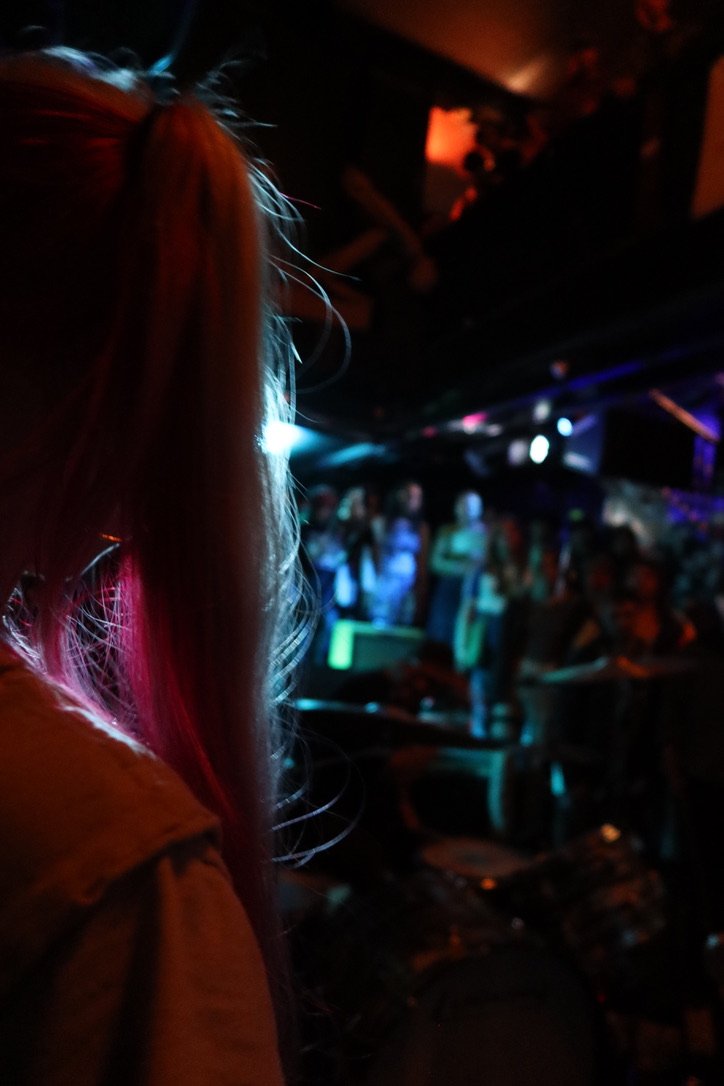
TAGABOW closed the show without an encore, but to wide smiles. Most of the audience had been truly present during the show, moshing and vocalizing along instead of waving phones around. While we can bemoan the death of shoegaze, nobody listening live really cared. No matter the genre label or geography, people will find a way to enjoy the moment and whatever community a live music ticket can buy them.
edited by Ezra Ellenborgen
photos taken by Mimi Mikhailov