An interview with Marc Cohn.
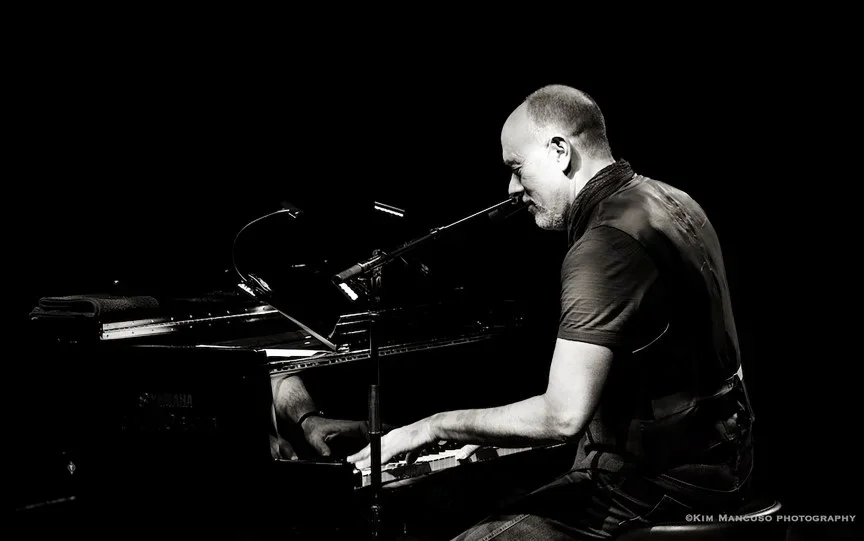
Marc Cohn is a singer-songwriter based in New York City. Cohn won a Grammy as Best New Artist in 1992 and was nominated for two more for his hit single “Walking in Memphis.” Cohn was diagnosed with Parkinson’s disease five years ago, in 2020. I sat down with him in New York City on November 25th, 2025.
When Cohn was a freshman at Oberlin College, he took a creative writing class. Fascinated by music and sick of short stories, he went up to his professor after class one day and asked if he could write lyrics for credit in the class. I’ll let him tell the rest of the story:
“I already had artists that I loved, namely James Taylor, Joni Mitchell, Van Morrison, people like that that wrote their own music. And when I found out that these people wrote the songs they were singing, it was a complete lights on kind of experience. Anyway, there was one record by Joni Mitchell that came out when I was about 17 called Hijira. And I went to the creative writing teacher and I said, have you read these lyrics? I'd like to use this. I'd like to write lyrics to get credit in creative writing. And he said, well, lyrics aren't creative writing. So I gave him this thing of Joni Mitchell songs, lyrics of hers, and said, what do you think? He said, ‘you're right, these are brilliant, but you're not Joni Mitchell.’ I said, well, that's why I'm here. Help me, teach me, show me. Yeah, it was a really stupid moment as far as a teacher goes. But it motivated me. I was kind of like, I'll show you.”
Show them he did. From then on, Cohn dove into lyrics: “I was super interested in lyric writing, that was something that interested me from the beginning.” I wished I’d asked him what some of his own lyrics were, but it was easy to find mine. Mine is from “True Companion," the third track on his eponymous 1991 album: “Well, you could hardly even see him in all of that chrome / The man with the plan and the pocket comb.” It’s sort of a silly line, but Cohn has the kind of voice that is rough and smooth and fills it with presence and nostalgia. Lyrics are his entry point into a piece of music, whether as a composer, performer, and listener.
“I find I'm always surprised how little people pay attention to words, which is the thing I pay attention to the most. And I feel a deeper connection with somebody who likes the same lyrics I like. They tend to be artists.”
I pushed him on this. In many ways, I fall right into the inattentive stereotypes he outlined. I am not an artist. I don’t think about how the song is made. I have never sat over a song and willed it to sense. I don’t listen to individual instruments or pick up double-tracked vocals. I dance to the words and don’t learn them. I only learn them to sing along. I’m ignorant and I’m cheap and I don’t appreciate the work artists like Marc Cohn put into their lyrics
But I love music and I take a lot of meaning from it. This is me here.
“I think for me, when I listen to music, the words are another instrument. It's also the kind of music I like, but I listen to the music and I take the way it sounds as a way you're supposed to feel. And I think sometimes that's what the artist wants, and sometimes they want you to actually listen to what's being said.”
I treat a lot of music like this, as a base to create my own “lyrics” in my head. I don’t argue there is more to “Walking in Memphis” than humming the chorus, but I am sure there is something to that both. The genre that is best designed for this approach to consuming music is Shoegaze. Championed by acts like My Bloody Valentine, Slowdive, the Cocteau Twins, the genre folds distorted affected guitars, vocals, and synths into one almost uniform “wall of sound.” This is a short description from Discogs.com. Not the most esteemed institution, but you get the point: “Shoegaze began as a British indie rock style which had an overwhelmingly loud sound, with long, droning riffs, waves of distortion, and cascades of feedback. Vocals and melodies disappear into the walls of guitars, creating a wash of sound where no instrument is distinguishable from the other.” In an extreme example, Cocteau Twins' songs literally have no words. Elizabeth Fraser, the lead vocalist,treats her voice as an instrument Compare it with a Marc Cohn Song, and you'd be shocked they both had a guitar. Yet I’m sure Elizabeth Fraser put a lot of thought and time into her songs as well.
We had a long, segmented conversation about songwriting and composition, exchanging tracks, artists, and albums we thought the other might enjoy. What was powerful was that Cohn treated my opinion as if mattered. Not only has he listened to more music than I’d ever have time to (the volume of CDs in his living room is proof enough of that), he's won a Grammy. But he was sitting patiently in his living room, letting me tell him that music that resembles a pack of locusts is better than his songwriting. I think that’s what makes him such a great musician. Not caring what people think, but valuing it.
But throughout this back and forth, neither of us disagreed where meaning was best communicated: live.
The very first question I asked was “Why do you perform?” Cohn chuckled at me as he responded ‘That’s a good question,” as if it wasn’t a very good one at all.
“I'm an artist. I want people to hear what I do as much as possible. And the best way to get people to hear what you do is to play. It's always been that way, and it's really still that way. If you want to know an artist or really know about an artist in terms of anything, live is the thing you need to do. You need to be good at it. You can be a great songwriter and not get much exposure if you don't play live.”
No matter what the song is trying to say—or how it said— nothing is ever conveyed if no one ever listens to it. When Cohn won his Oscar 1991, he thanked his promotion team for what can be an “impossibility”: getting his record heard. After, he shared an anecdote about how he heard music growing up that warmed my heart as an aspiring radio DJ myself.
“Radio was the thing that made me stick with music. Sunday morning was when the rock station in Cleveland played album-oriented rock. They were definitely the songs that you wouldn't hear during the week. And I formed a relationship with the top DJ on the weekends at WMMS, trying to find out who it was he was playing, because I'd never heard these people before. And it was Joni and James Taylor and Jackson Brown and the band and all kinds of people. And they blew my mind, those artists. And he stayed on the phone with me. He knew I was a young kid. They wanted to learn about music. Music was obviously his love. So I would call him on Sunday mornings. He'd answer the phone at the station and we talked about music. I said, you know, who is this group? He said, that's the band. The band, that's the name of the group. I just remember he was really patient and I think liked that there was a young kid that was into what he was into. So without radio, I'm not sure where I would have heard any of the stuff I ended up loving. Now, there's a hundred places to go to listen to music. Then, there wasn't.”
I made a point to ask Cohn about the change in music consumption over his career. Over the course of almost 4 decades in the music industry, he has witnessed a complete restructuring in the way music is distributed and consumed. He cut me off before I could finish my question.
“Oh man, I think it's changed everything. The way artists don't get signed and don't get signed, how they get noticed or don't get noticed. You know, I had, like I told you, I had a DJ to talk to on a Sunday morning. That was it. I mean, that was enough. Because that's where I heard all the music and I ended up loving it. It's changed so much that I've lost contact with it. I really have no connection to the business as it is today. It's so different. What I wanted most of all as I was growing up. It was a contract with the Warner Brothers. You know, I could see the label and go, oh, that's where I want to be because all my favorite artists were on Warner Brothers. Do you think you'd have, what do you think your dream would be if you grew up today? I don't know. That's a great question. I don't think anybody would say, God, I really want to be on this label or that label. Labels are pretty much hated in a lot of cases and very non-artist, they're non-artist focused and they used to be artist focused very much so i mean major job was a r artist and repertoire at most companies which was all about finding artists and finding them songs that they didn't have their own and that's not how they work these days it can't be bothered it's too bad they wait for people to come to that yeah and though a lot of people aren't coming to them either so they may have to change their tune sooner or later.”
And to finish, his ode to the album.
“What I miss is the album. It's the art form that I miss. I'm guilty of not listening to an album the way it's meant to be listened to as well. But I still have heard the 50 greatest albums there are over and over and over again. And I know why they're great. It's an art form, the way that people made albums. I mean, I know the way I made my albums. There was a beginning, a middle, and an end to the narrative. And that makes a great album. And that's still, I mean, I think rock and roll singles are fascinating too, what makes them work more than others. But the album is what I miss. I spent days working on the sequencing of my records with the producer.”
So please, put on Marc Cohn (the album!) and let it play all the way through.
edited by River Wang.
photo by Kim Mancuso.