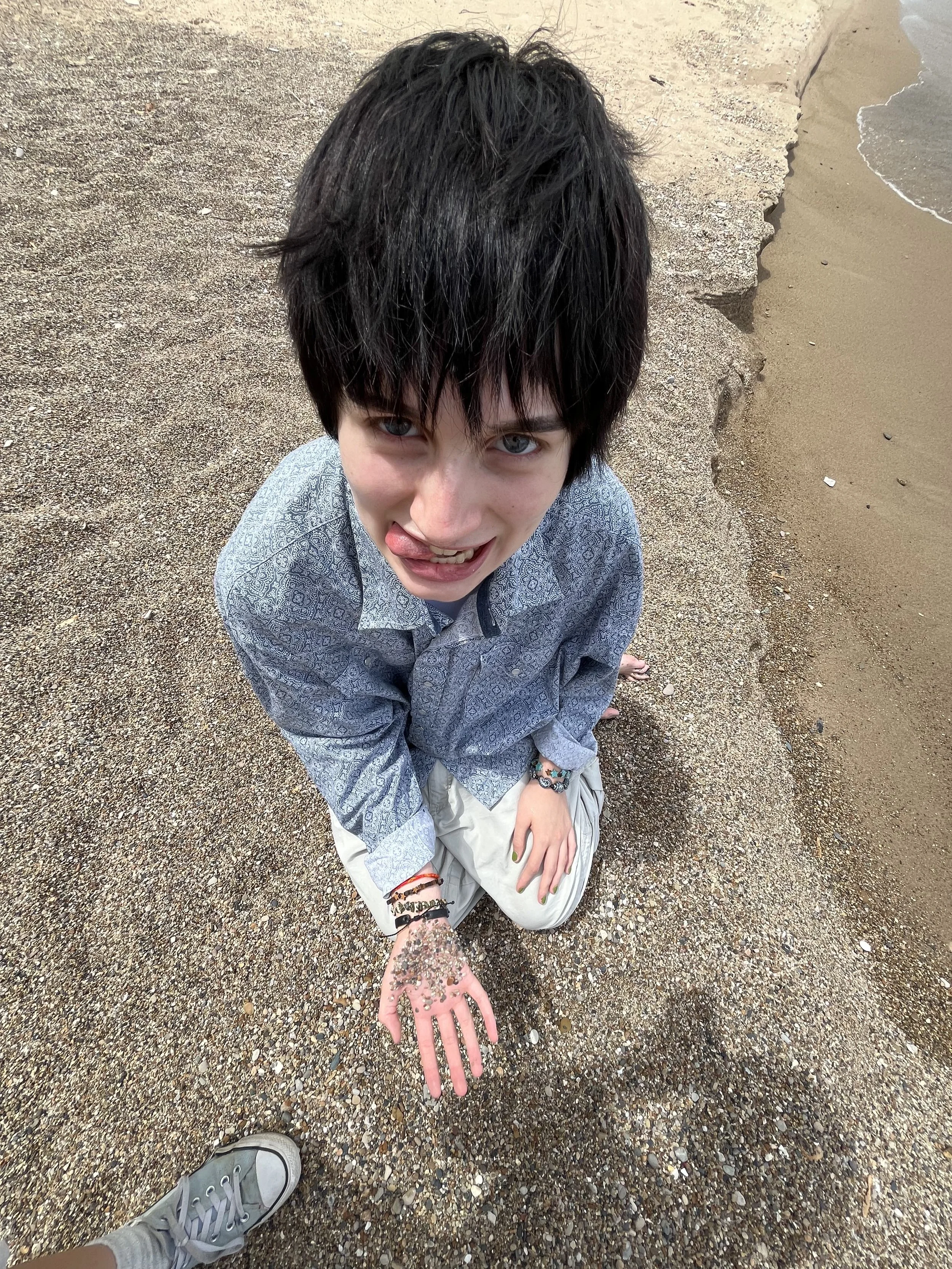
Hyperpop’s chaos cracked open my sense of gender, teaching me that artifice isn’t the opposite of truth, but sometimes the only way to get there.
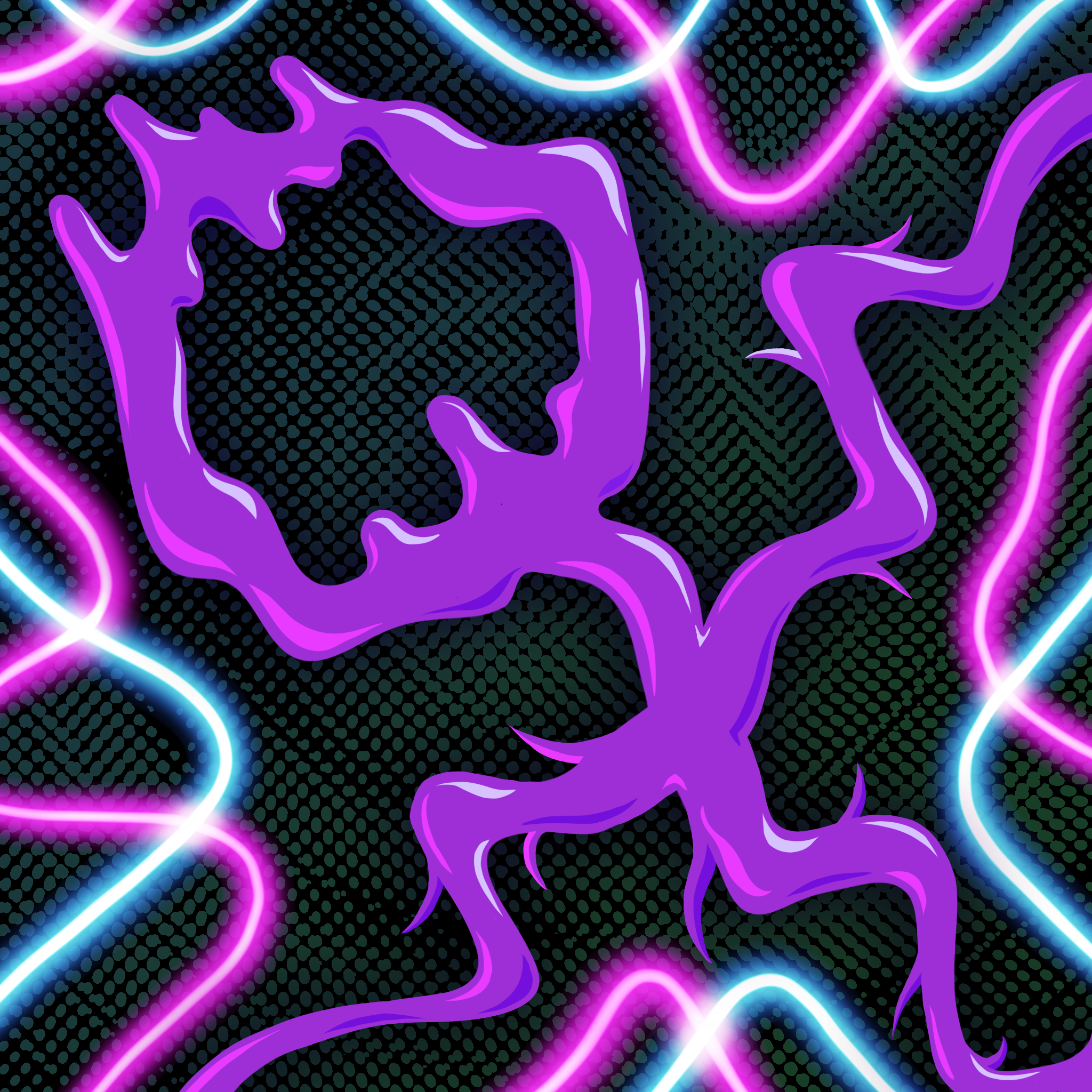
artwork by Asher Stone.
I first heard Ayesha Erotica on a morning when I absolutely should not have been hearing Ayesha Erotica.
Midwest High School, cafeteria in that half-dead space between passing periods. Kids slumped over plastic tables, fluorescent lights buzzing like they wanted to escape. A girl with bleach-blonde hair blasting her iPhone at full volume like it was her entire personality.
"Yeah, you bucktooth Beckies can't rhyme for s***/Heard your record and your lines sound just like his."
That raw, raunchy, I don't give a damn attitude sent me to the stratosphere. I had never heard anyone sound that wrong on purpose before, and something in my brain snapped open. It felt like a tiny message from the universe saying gender is already fake, just do whatever you want.
Hyperpop entered my life the way gender enters for a lot of people: too loud, too messy, too gaudy, too "turn that off." Everything about it that annoyed everyone else made instant sense to me.
People love describing hyperpop as aggressive, digital, ironic, whatever. But the first time I actually listened, I mean listened-listened, it was not irony at all. It felt like someone ripped off the plastic skin of pop femininity and exposed the glittering circuitry underneath. A beauty completely invented and intentional. Honest because it was exaggerated. A femininity so artificial it looped back into sincerity.
At fourteen, a trans guy terrified of being seen as too feminine, hearing sleazy lyrics over blown-out bass was weirdly comforting.
Like maybe femininity did not have to be soft or polite.
Maybe it did not have to be something I inherited.
Maybe I could pick it up, break it apart, and remake it the way I wanted.
Because the thing is, society will never understand trans people.
It will always be confused or scared or cruel.
You can waste your whole life trying to make yourself digestible to people who will never even bother to chew.
Hyperpop taught me to stop trying.
To stop waiting for permission.
To start creating myself anyway.
We talk like hyperpop reinvented excess, but pop and femininity have always been performances.
The pop girl, the archetype, the fantasia, the angel with hair extensions, has never been about being a woman. She is about performing womanhood so intensely it becomes a spectacle. Britney, Gaga, early Katy Perry. Not women, but ideas of women sculpted for mass consumption.
Traditional pop hides the seams, lace front glued, contour blended into oblivion. Hyperpop exaggerates the seams so you cannot look away.
Hyperpop is not making femininity absurd. It is revealing that femininity has always been absurd and that absurdity is powerful.
Dorian Electra turns masculinity into spectacle too. Rhinestoned football gear, drawn-on John Waters mustaches, outrageous vocal fry. Masculinity becomes a costume which is honestly more truthful than whatever natural masculinity is supposed to be.
HorsegiirL gallops beyond pop stardom entirely. She becomes a digital creature, a horse-girl myth built out of the internet. Something beyond what a pop star is allowed to be. Her whole look feels like a refusal to remain human in the way people expect.
SOPHIE makes sounds that feel like metal bending and skin growing. She takes bodies apart and puts them back together inside the music. Listening to her felt like receiving a truth I did not know I needed: identity is sculpted. Not assigned. Not inherited. Sculpted.
Hyperpop frames gender as something that can change constantly. A draft, not a finished album.
Pitch-shifting can soothe dysphoria.
Distortion can feel like honesty.
The glitch becomes part of the face.
What I find most comforting is that none of these artists try to be understood.
They are not trying to make sense to people who already decided to misunderstand them.
They are not chasing naturalness or normalcy because those words were never made for people like us anyway.
If the world sees you as an alien, why not play into it.
Why not build your own shape, your own color, your own noise.
These artists were not blending into the world. They were exploding out of it. Building their own universes from chaos.
In a world that refuses to see transness as human, hyperpop gives us a place where artificiality becomes sacred. Where exaggeration becomes survival.
A refuge where being too much is the entire point.
A place where excess becomes grace.
A place where the synthetic becomes holy.
Laura Les screaming through filters until her voice becomes pure electricity is not hiding anything. She is showing what transition actually feels like.
Not "I was born this way."But "I built this."
And not many people can say that.
The more hyperpop I listen to, the more I realize I do not want authenticity if authenticity only means whatever society assigned me.
I want the version of myself I make.
The one I choose.
The one I carve from noise and glitter and intention.
Give me the distortion.
Give me the fake stuff.
Give me neon femininity in its most synthetic form.
What looks unreal to others feels more true to me than anything I was handed at birth.
Hyperpop taught me the seams do not ruin the garment. They are the structure.
And if pop has always been drag, then transness is not imitation. It is transcendence.
Becoming yourself, messy and glitchy and painful, is not a failure.
It is devotion.
When I play Ayesha Erotica now, I do not hear chaos.
I hear the moment I stopped caring if the world understood me and started becoming myself anyway.
edited by Sam Espinal Jr.
artwork by Asher Stone.