In a wretched world where meaning is meaningless, this underground “rapper” plays the fool.
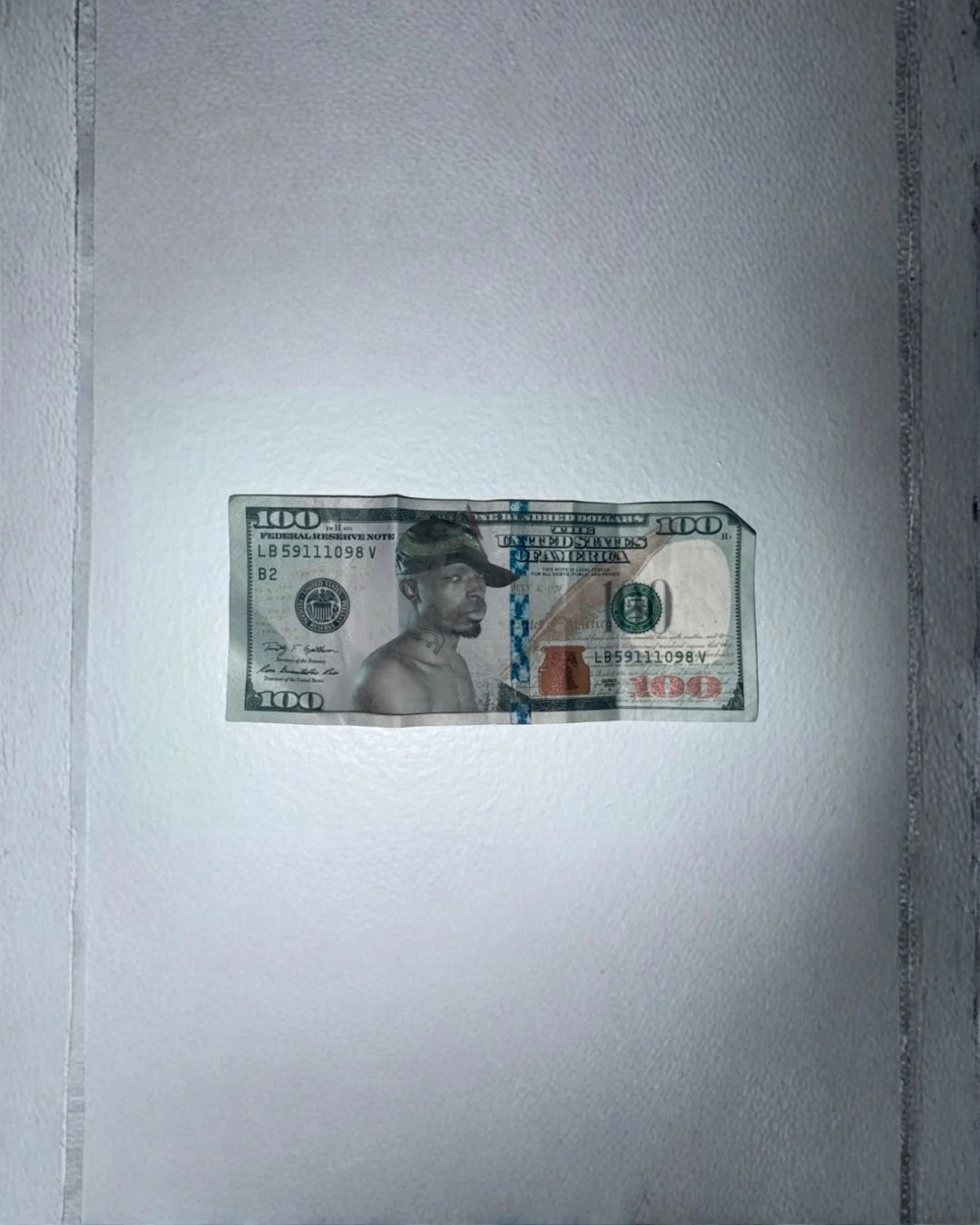
artwork by Andrew Hickman.
“I don’t really care about music at all…I’m doing it so that I can like, do my real passion, which is to like control like a group of people and, um, you know, have enough money to pay them, and I want to just say something and then it comes into existence.” This is a quote from Edward King Bass IV, professionally known as Edward Skeletrix, spoken in his only filmed interview between sips of liquor and after a scathing, twenty minute unedited confession about a former friend and collaborator. In swathes of disjointed beeps and barely intelligible autotuned mumbles, Skeletrix quietly captured the attention of the underground music scene. At one point, photoshopped pictures of him with impossibly thin limbs and seedy AI-generated footage of glossy, sharp-toothed creatures were the only visual ties listeners could associate with the artist who distinctly separated himself from the formulaic rap songs that oversaturated the charts. Despite this, Skeletrix doesn’t want you to forget the titans of modern rap and the influence they’ve imparted. He wants to paint a picture of a cultural object that’s been copied thousands of times, such that its structure is unstable and purely referential—a hyperreality fitted with all the imperfections of modern design, but a reality where instability is considered fine art.
Bass himself wears many hats: a producer, visual artist, rapper, and fashion designer. Notably, he’s the mind behind the “SYCKLI” brand as worn by many high profile individuals. He began producing on SoundCloud under the alias “Cight,” working with rappers such as XXXTentacion and Night Lovell. The Skeletrix alias later rose to prominence when Bass began posting outlandish AI-generated videos to TikTok; think crude AI imagery circa 2023 which still comfortably resided in the realm of uncanny valley. Food reviewers transmogrified into hideous slop-eating creatures and a radiant bald fellow named “Hubert Skeletrix” were amongst the early Skeletrix mythology dramatis personae, but this era has been largely scraped from the Internet.
Of the fourteen tracks on his debut LP Skeletrix Language (2023), ten are ironically titled “Typical Rap Song” followed by the numbers one through ten. One of the only titled songs on Skeletrix Language, “Rappeur FW 24 SS 24” is a distorted and reversed version of Playboi Carti’s “Teen X” in which Skeletrix mumbles loose references to the original song before proclaiming, “This ain’t no Teen X, this that Skeletrix.” Muddying the waters like this only raised intrigue in Skeletrix’s music and cultural identity. Is this ignorance? A statement? One big joke at our expense? The answer is unclear, or likely a combination of the latter two. Who knows?
And who cares? Skeletrix doesn’t want you to, and the music will punish you for trying to extract any meaning, even if it might be there. Any lyrical profundities are loose, flimsy, and lost without proper context. Museum Music (2025) saw Skeletrix develop his project into an object meant to resemble fine art, but the record is filled with mantric setups without punchlines. Repetitions of phrases like, “life’s so funny,” “you can’t buy they heart, not for retail,” or “you a monster/demon,” mimic meaning, but end up as breadcrumbs down dead ends, ultimately simulating or resisting interpretation. The ambient “Congratulations” sees Skeletrix insincerely lamenting all the sadness and pain in the world while simultaneously trying to affirm his own toughness. “I be telling ‘em, ‘Just be happy,’ you know? They don’t listen to me,” he mutters. In his sole interview, Skeletrix remarked that he previously worked in a psychiatric ward, an experience that spawned an uncomfortable distortion in his mental health. Psychological fogginess materializes in Skeletrix’s work, both visually and audibly, and it’s remarkably evident in a song like “Congratulations.” While it’s easy to dismiss these lyrics as pure nonsense, there’s plenty of evidence that this chaos is quite controlled.
Like a caged animal, it sometimes feels like Skeletrix is attempting to make an insightful observation or allusion to his mental state but an invisible electric fence keeps him in check. “Drug Dealer Injects His Fentanyl (Psychosis)” may or may not contain a visceral look at America’s opioid crisis, but any evidence of a serious narrative is stifled beneath an almost carnivalesque instrumental and brilliant lines like, “I can sing like Beyonce,” or, “feel like Batman.” In other cases, Skeletrix replaces the veil of absurdity with one of nonchalance, perhaps satirizing the ambivalent opiate haze in many popular rap songs.
Skeletrix mocks the idea of contriving meaning or associations between previously established tropes, but in a manner that itself acts as a standalone piece of modern art. Skeletrix himself has previously referred to his persona as a “project,” something that should be observed in its totality. Whether it’s his 2025 project Museum Music (ironically featuring AI-generated cover art) or his upcoming album Body of Work, both associate the combination of their distinctive pieces to refined artistic processes even from just their naming conventions. We can infer that Skeletrix’s music challenges what fine art is as evidenced by the sheer lunacy in many of his songs’ production and sample choices. The music’s piercing, uncomfortable frequencies, distorted pulses, and autotuned grunting are all ingredients quick to be dismissed by critics as “troll music,” an illegitimate effort to grab attention for its own sake. Despite this, Skeletrix has recently doubled down on associating his work with fine art by staging exhibitions in New York City. His recent foray into the modern art world was mostly separate from his musical identity. However, pieces like a performance art stunt in which an announcement was interrupted by a (fake) stabbing or nightmarish caricatures of humans are evidence of Skeletrix’s continuing desire to subvert artistic conventions.
The paths winding down Skeletrix’s music are not meant to be charted to completion. Interpreting fine art is dissatisfying; the meaning we contrive is corrected by the artist’s voice echoing in placards or interviews outside the piece itself. The drug-induced mumblings of many contemporary rappers’ music may be a sign of nihilistic suffering, bodily incapacitation, or plain laziness. I believe Skeletrix embodies the helpless act of interpretation as an amalgamated mass of confusion and hysteria that quietly whispers, “nothing matters” in our ear, so why try to traverse any further? What is there to lose in indulging Skeletrix’s irreverent plea for artistic dignity?
While subversion could be the heart of the Edward Skeletrix project, I have reason to believe it goes much deeper than that. Skeletrix might have you believe that his sole intentions behind the project are, “getting [his] racks up,” something he shares on the Museum Music track “Making Art For Money,” but fiscal motivation rings ironic considering how far outside of the mainstream his music is. There isn’t much within the current state of the Skeletrix mythology that would coincide with overwhelming financial success, which may be why Skeletrix sincerely or insincerely follows the path of the modern conceptual artist, doomed to the niches of the avant-garde rap world, endlessly analyzed by overcurious Redditors. There’s a good chance the “authentic” Edward Skeletrix will never come to light, and we’ll all be left with a metamorphic, evasive idea of an artist. If it’s all a sick joke, many Skeletrix loyalists (myself included) will surely be glad to have been the subject of it.
edited by Levi Simon.
artowrk by Andrew Hickman.