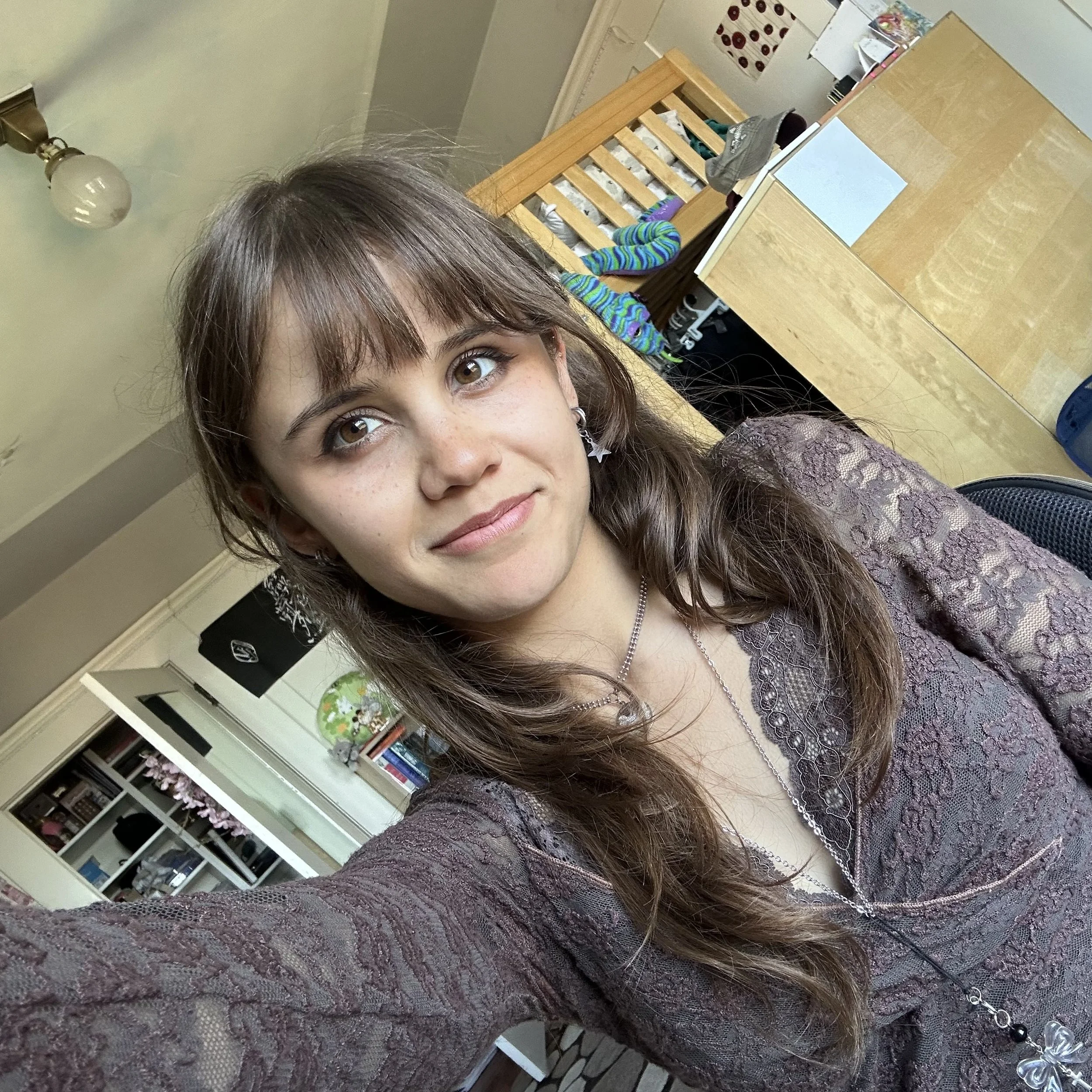
I was a victim of the bass. The bass was a victim of the modern world.
The bassvictim concert was less about musical artistry and more about community, emotion, and dancing. And vaping.
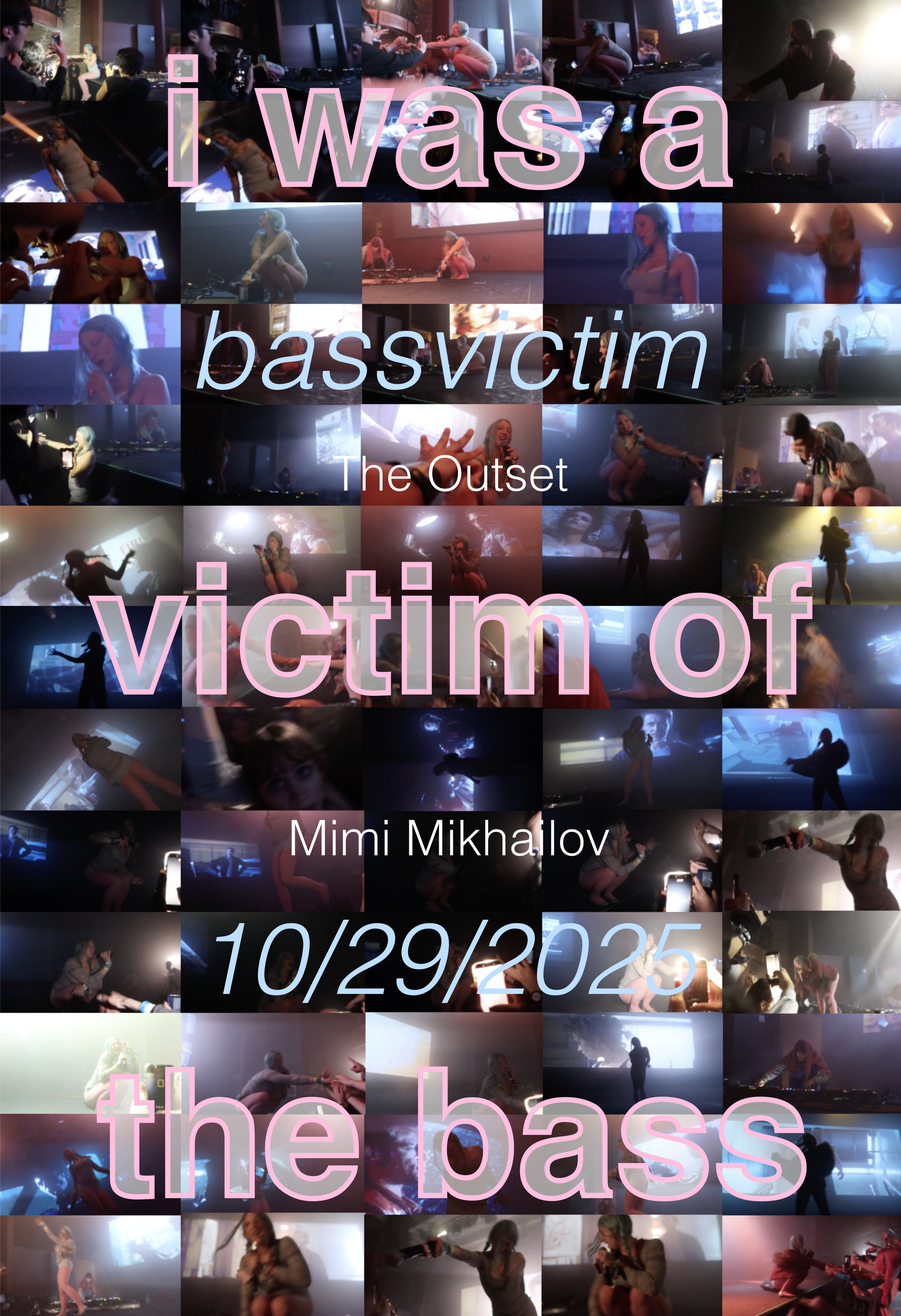
cover by Mimi Mikhailov.
photos by Taylor Pate and Mimi Mikhailov.
Dizzy from a slew of buses and trains, I was dropped on the side of a busy highway on a grey, late October day. Past abandoned lots, brick warehouses, and gas stations sat the Outset, a venue that has been open barely a year, and the object of my pilgrimage north. I waited outside surrounded by pastel-dyed hair, mini shorts, neon tights, fur lined hoods, platform boots, and pronounced makeup. I felt severely underdressed. I was seeing bassvictim afterall, I should have guessed.
If you aren’t in the know, bassvictim is London-based electronic duo Maria Manow (vocals) and Ike Clateman (production). Manow and Clateman infamously disliked each other upon first meeting, but reconvened over their shared victimization by bass heavy music at a party one night. Steadily rising in popularity over the last two years, bassvictim is becoming well known outside the niche of electronic aficionados, even playing UChicago’s own Winter Freeze last year. They just finished their first and completely sold out U.S. tour, which included playing in the LA shoegaze/electroclash festival And Always Forever. They’ve released three albums in just under one and a half years, and their newest, Forever, marks a shift, or perhaps refinement, of their fun, eclectic style.
The surprise opener, Worldpeace DMT, a one man 70’s-inspired acoustic guitar and harmonica set, was a crowd pleaser, despite his wild departure from bassvictim’s typical style. While his songs took a more nostalgic and contemplative tone, they didn’t lose any of the playful, experimental, and carefree nature that is perhaps at the heart of bassvictim. Manow came on stage for one song, and in her singing still at the mic stand, fur hood up, looking slightly morose, I was able to see a whole other dimension of bassvictim: the more quiet, existential tone that really shines on Forever.
Bathed in black-blue light, the audience of the sold out show waited as the end credits of Fight Club (1999) rolled in reverse. Manow and Clateman sauntered on to cheers, and the crowd, as if magnetic, pushed up like waves against the barrier. While Clateman spent the majority of the set crouched and hovering over a vast board of electronics on the floor, Manow danced around the stage, unburdened by a mic stand.
It was unlike any concert I’d ever been to before. Manow was perpetually obscured by the lack of stagelights, and so her silhouette danced with us, jumping and playing with the music, sometimes crouched by the edge of the stage, sometimes sauntering between the barrier, sometimes curled over, looking like she was about to cry. Everyone in the crowd, especially at the front of the barrier where I was, screamed the lyrics with a ruthless passion, sometimes screaming them into Manow’s mic, which she repeatedly offered up, along with her hand, making hearts and holding on while the bass shattered us to our cores.
Music was less the object of our experience, but the medium we came together through. “Electroclash,” electronic music in general, is a unique genre to experience live because its instrumentation is made so trivial, one need not use instruments at all, though in my opinion it often enhances performances (think LCD Soundsystem and their full band, or Frost Children opening for julie with drums and a bass). Bassvictim was certainly one of the most musically removed performances I’d seen, with no instruments but Clateman’s turntables on the stage floor. I remember the sensation of jumping with hundreds of people as if we were a single mass, flailing our hair and limbs and stepping on each other’s feet. I remember Clateman splashing water across our distracted faces and the screams of surprise and relief it procured in the increasingly heated room. I remember holding Manow’s hand, somewhere between a clingy, childish grip, and an informal brush of two strangers. We were all reduced to childlike states, playing with the rhythms that wavered in the air, jumping and laughing and singing and dancing. The concert was less a showcase of the talent and musicality of bassvictim, and more a karaoke dance party, something you could expect your friends to throw.
There was a carefree messiness to it all: the whipping hair, the passing of vapes, the sloshing of spirits in cans. My battery was so low it was nearly dead, everyone’s phone or camera was constantly on, though what they were trying to capture in the thrashing dancing up and down, is unknown, and uncared for, even to the recorders. But there was a kindness: nobody scoffed at the recordings, nobody pushed around for space. It was probably one of the nicest crowds I had experienced (low bar, shoegaze pits get nasty), the guy next to me asked me if I was okay as my elbows got slammed and bruised against the barrier and offered me his vape, which I declined.
The encore practically wasn’t one. Clateman and Manow paused in the hallway and then came right back out. Manow even jumped the barrier and was in the crowd for a good song or two.
After the lights came on for real this time, human needs returned. Sweaty, thirsty, but bright eyed, I ventured to the gas station with the friends I had made from waiting in line. The water was so cold it burned, the night air so fresh it felt like some kind of rebirth, from the womb of flailing limbs and vape smoke. As I rode home I watched a large American flag flap, unlit in the sky. So freeing, so fleeting, so fun. I had been washed by the sweat and tears and smoke of some kind of kindness, some kind of connection we have all been looking for.
We all rejoiced in being victims of the bass that day, we all rejoiced because truly we were victims of the modern world. The dancing, screaming, finding friendly faces in strangers, holding onto them for dear life. All of this was only necessary because it was taken away from us before it was ever given to us. Through endless screens and nicotine, we shut down our feelings, though never fully enough to shake the residue of them.
While critics might complain about the lack of concept and training that goes into many electroclash acts, there is no valour in pushing people away for what they enjoy, especially if you push them away from community. There was community in that room whether we knew each other or not, whether we will ever remember each other’s faces or not. In the age of AI and the age of performance where we sell ourselves and seek to sell ourselves faster, there is incredible value in slowing down, dancing, and singing out, on a random Wednesday night.
edited by Ezra Ellenborgen.
cover by Mimi Mikhailov.
photos by Taylor Pate and Mimi Mikhailov.