The Double Edged Sword II
The Atlanta-based trio fends off performative punks and hollow popstars with their innovative record and community-focused live show.
photos by Mimi Mikhailov.
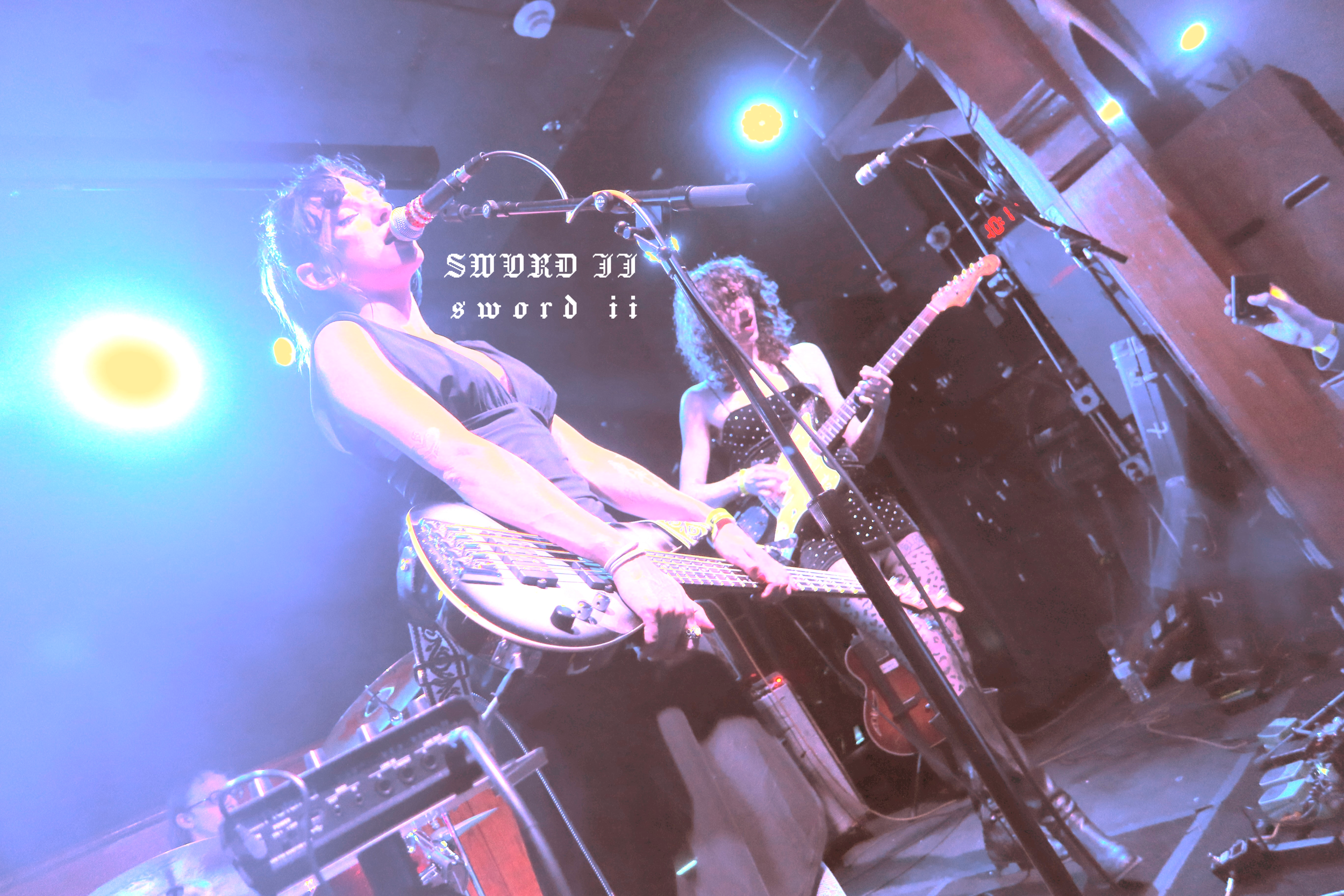
As I approached the unassuming Schubas Tavern, the trio of Sword II—Mari González, Travis Arnold, and Certain Zuko—were loading instruments through the front door. After dithering around, assuming this had to be the back entrance, I looked up to see my friend laughing through the window at my confusion.
“That was them right?” He said excitedly.
“Probably?” But when we looked around, only the swinging of the venue door suggested the band’s presence. For an Audiotree-presented, sold-out show, the bar was only dotted with what looked like regulars. We milled around, and when doors opened, staked our place in the front row of the notably barrier-less stage.
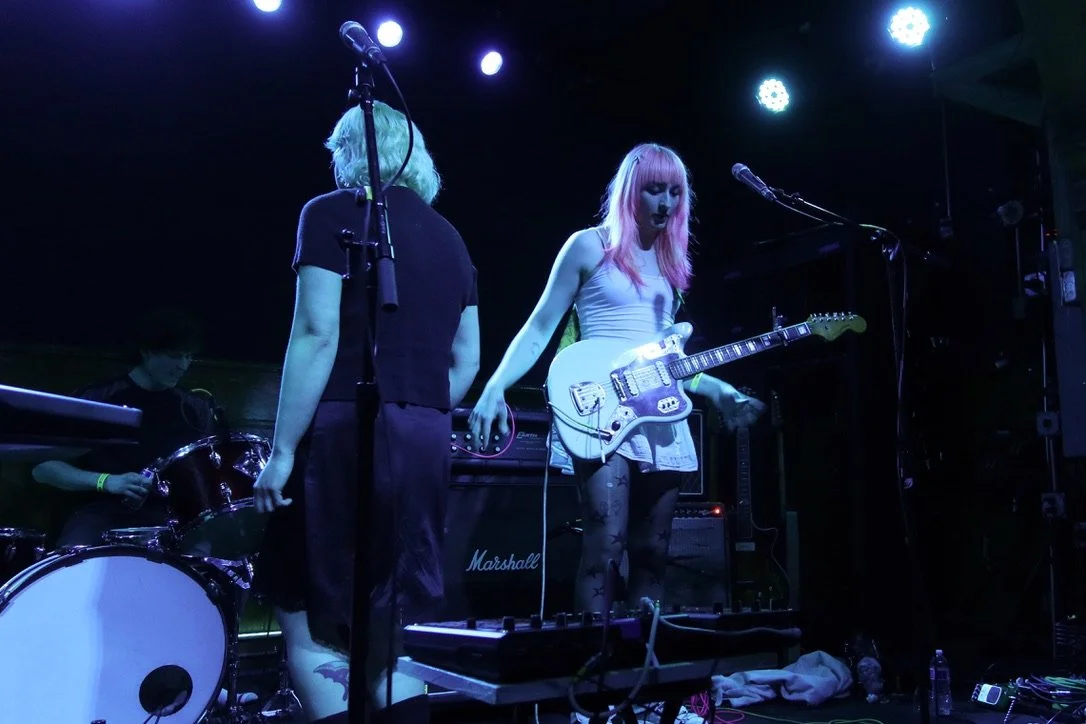
With barely a warning, the first opener, Con, exploded into energetic rock with colorful guitars. You could tell the band was there for a genuine enjoyment of playing music: smiles permeated the stage, and heads banged along to each strum and drum beat. I looked around, and to my surprise, the once-barren bar had produced a steady stream of viewers. Better late than never, I thought.
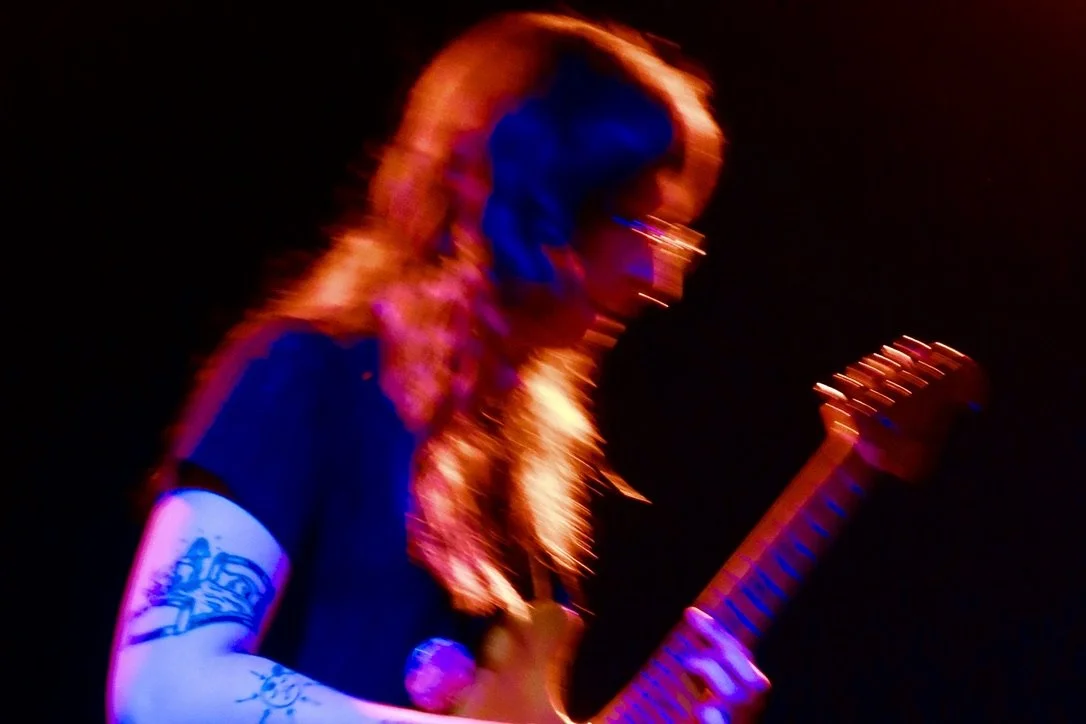
The friendliness and fun that emanated from the stage did not dissipate when Total Wife, of cult-famous Julia’s War Records, spread their dreamy shoegaze like a soft velvet hand over the crowd. Vocalist Ash Richter sang as if playfully entranced, swaying with closed eyes and fluidly dancing about any stage space that wasn’t taken up by mounting amps. I felt like I was watching Julee Cruise perform “The Nightingale” in the Twin Peaks pilot, and for good reason: Luna Kupper describes her process for creating Come Back Down as one where, like Dale Cooper of Twin Peaks, she would drift into sleep and awake with new puzzle pieces for the album.
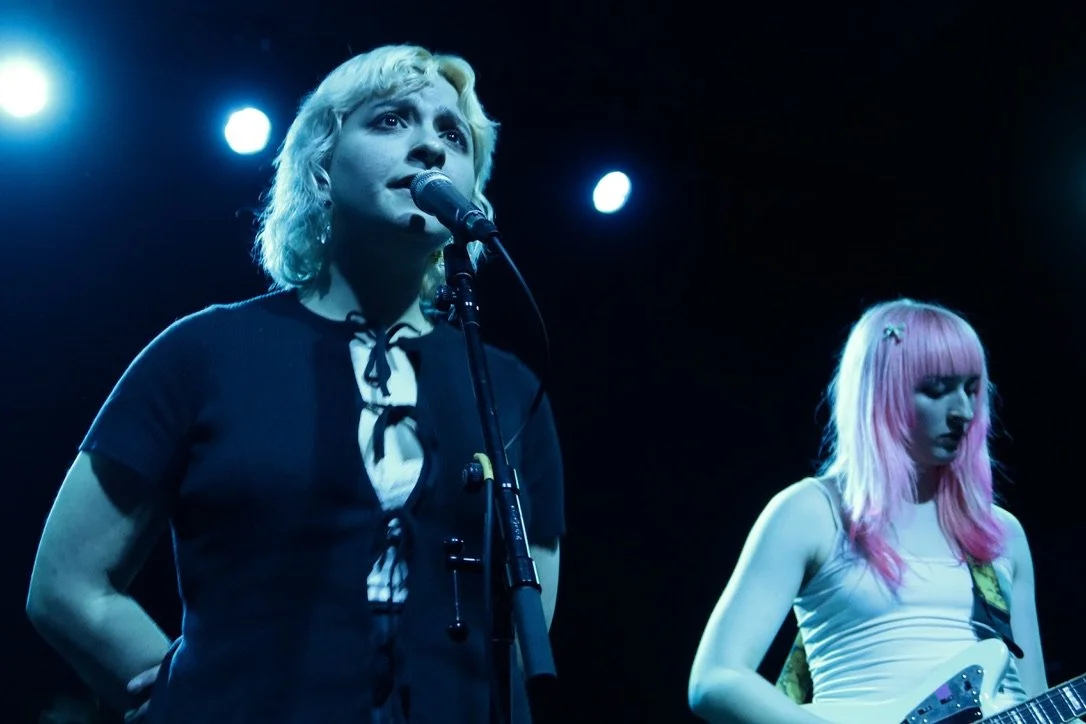
Though the audience and I were already undeniably charmed, Total Wife made sure we knew they weren’t some forgettable and complacent shoegaze band. Without announcing their last song, they plunged into a ten-plus minute refrain where every band member played their instrument as fast and loud as possible. Beads of sweat turned into full faces of ecstatic sheen illuminated by the ethereal blue stage lights. The audience was on the tips of their toes not knowing what to do or when it would end. We existed in a liminal space of purgatory with the band. Would the end of this excruciating suspense be heaven or hell? Were we travelling through time or staying still?
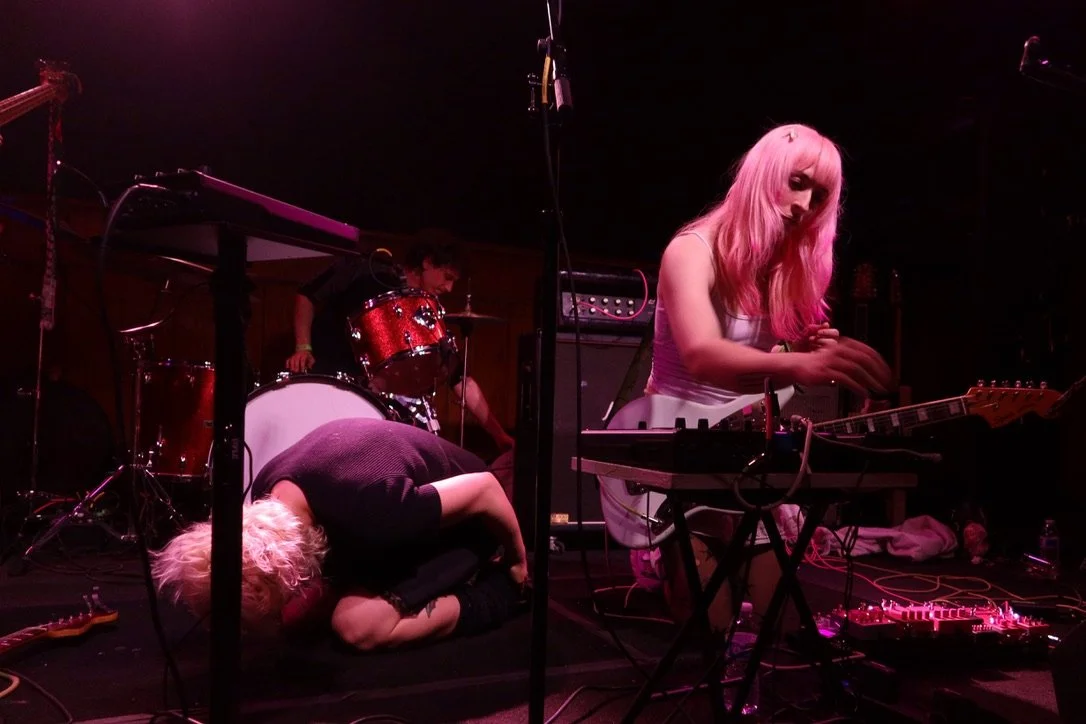
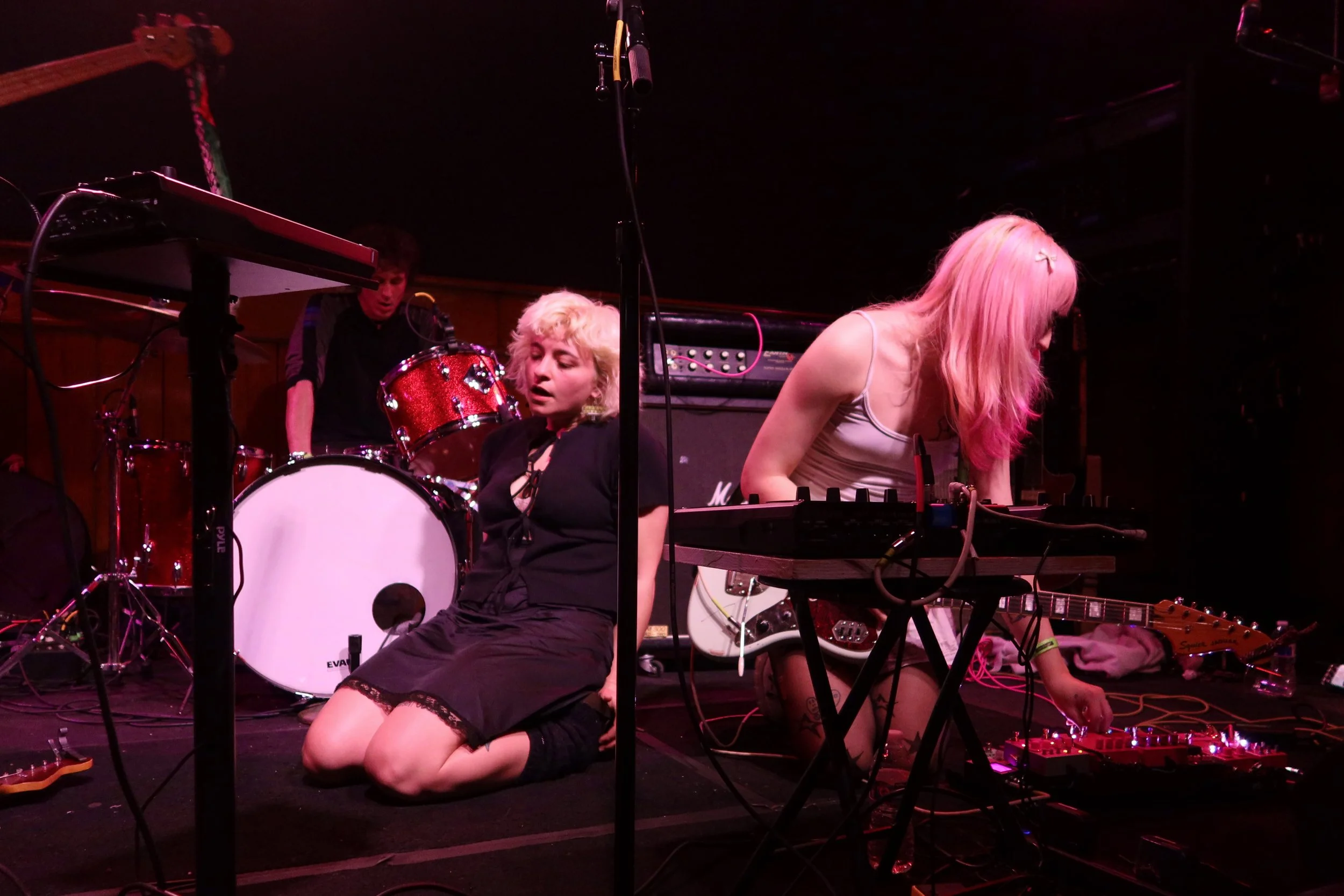
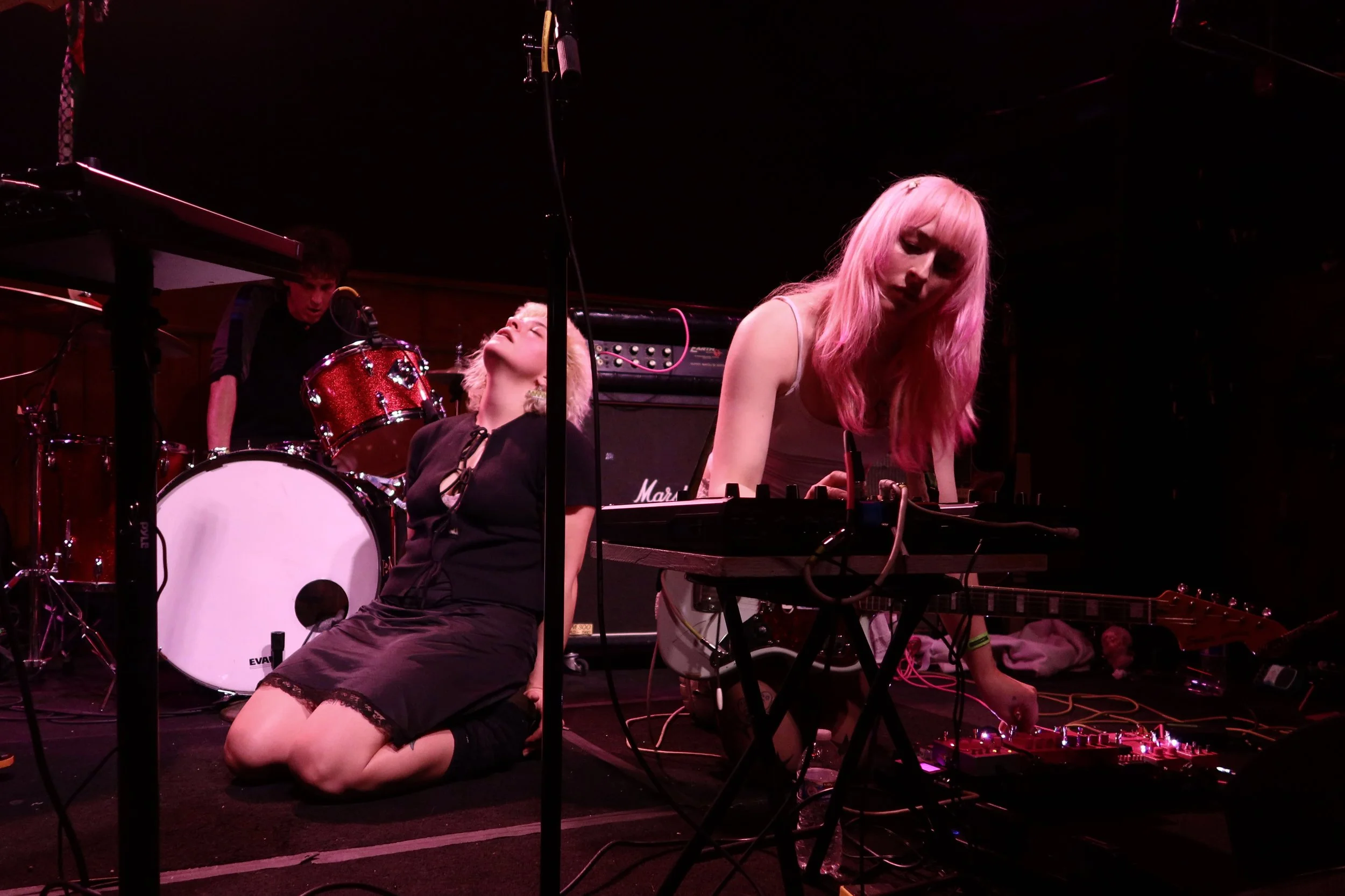
Was this music or was it sport? Was it performance or performance art? Were we implicated in this exercise or were we voyeurs? Total Wife blurred the line between ecstasies and releases of all kinds—athletic, orgasmic, musical, etc. They demonstrated their belief that music is as much an essential and mundane part of life as breathing, but also as ethereal and transcendental as the most intimate relationships. By performing for us, they asked us to perform with them: as they sweat and strummed, we stood and saw. In accepting their invite to their dedication and ethos by listening, by not dissociating or pulling out our phones when the going got tough and the sound stretched on and on, they shared with us that music to them is more than entertainment, more than a job. They invited us to see music as an art and a way to live life, one that is not contained in airpods and mp3 files, but in the community between stage and audience.
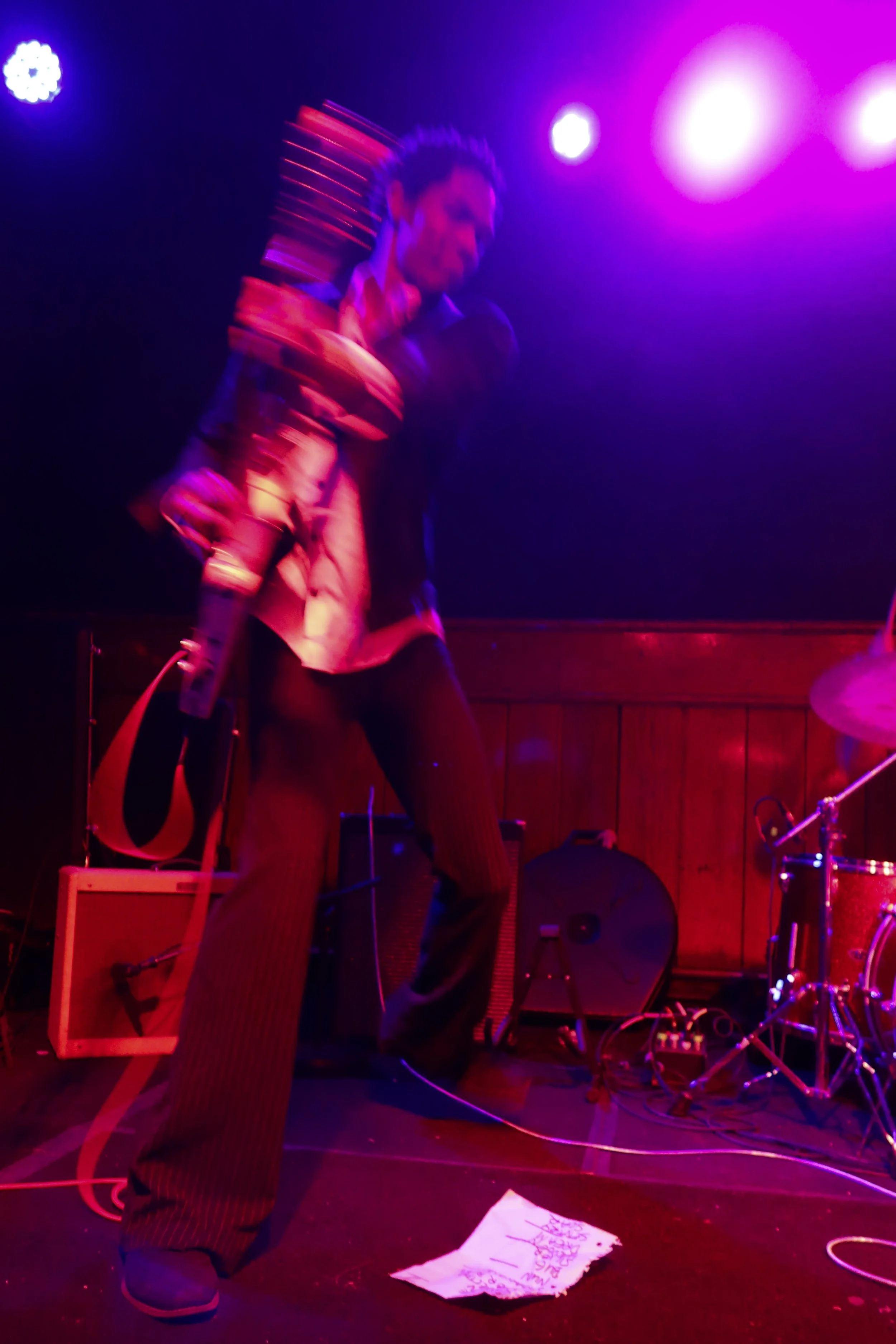
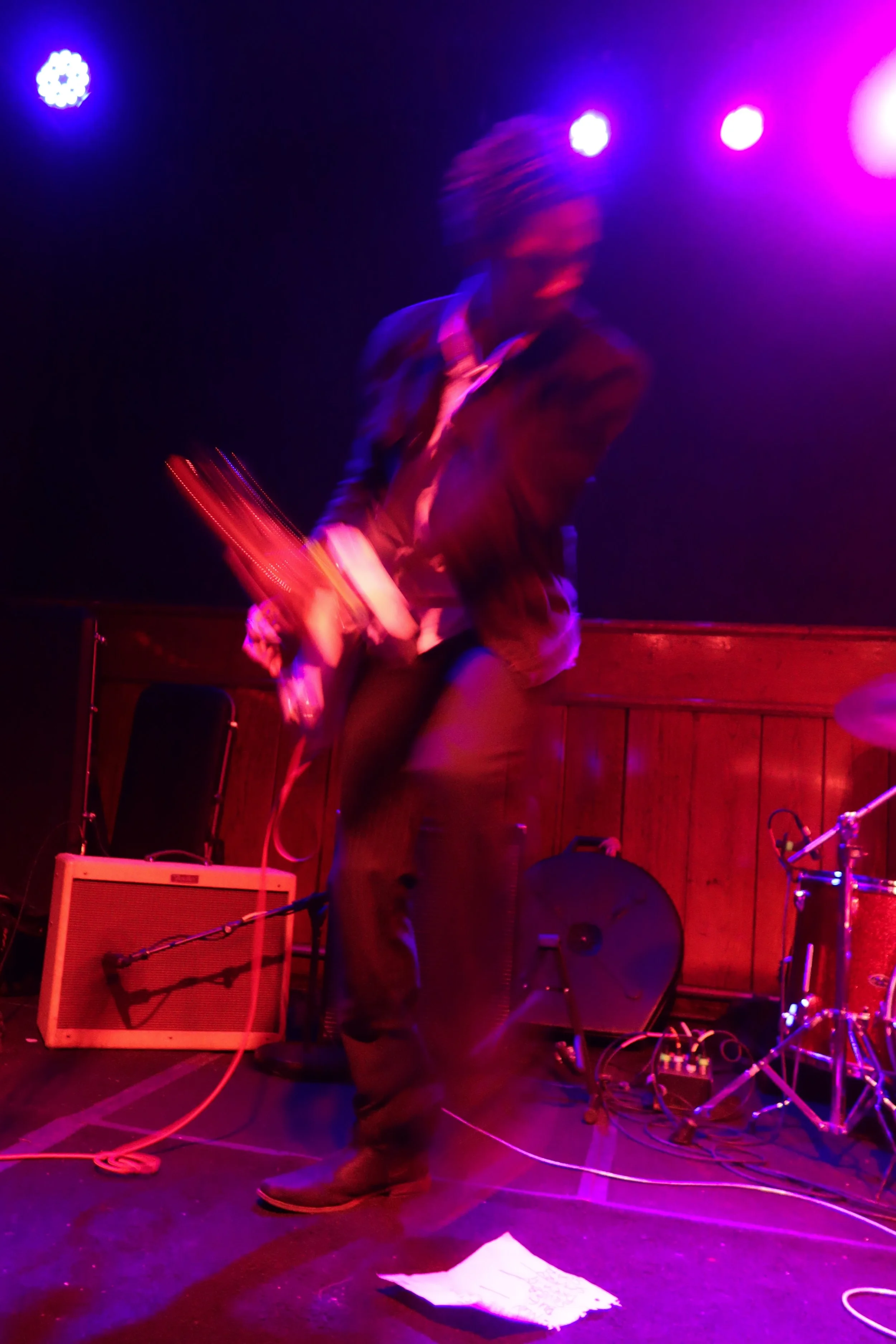
I began to think that perhaps Sword II’s entrance through the front door and the audience’s lack of anxious queuing reflected the disposition of the bands playing and the audience they attracted more than the fact we were in a small venue on a Tuesday night. Con was fun and genuine, Total Wife was vulnerable and experimental, and I couldn’t wait to see what Sword II would be like. My jaded expectation coming in that a sold-out show meant aggressive queue camping, and that cult up-and-coming shoegaze and indie-rock bands meant an unfriendly crowd and aloof musicians, was starting to crack.
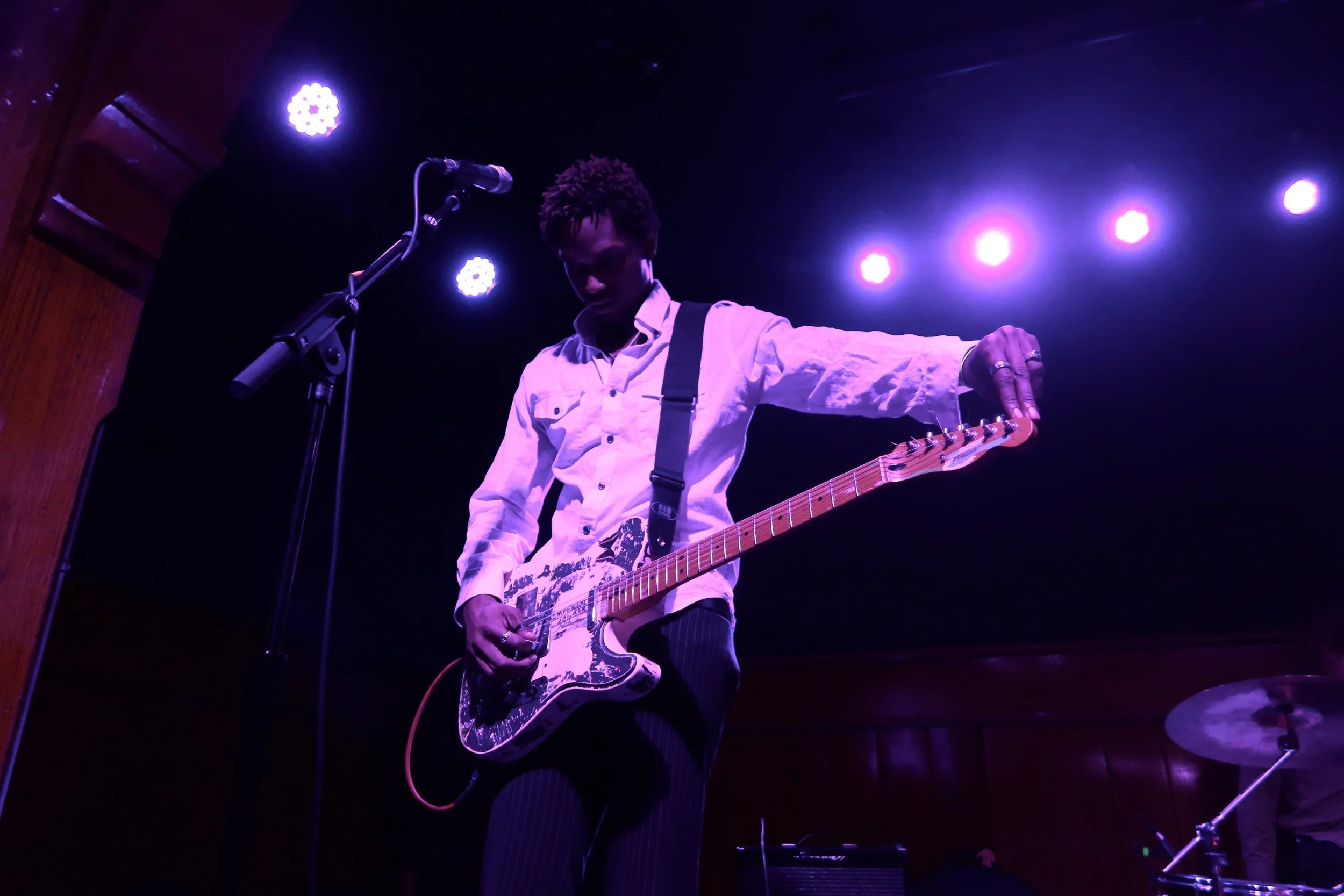
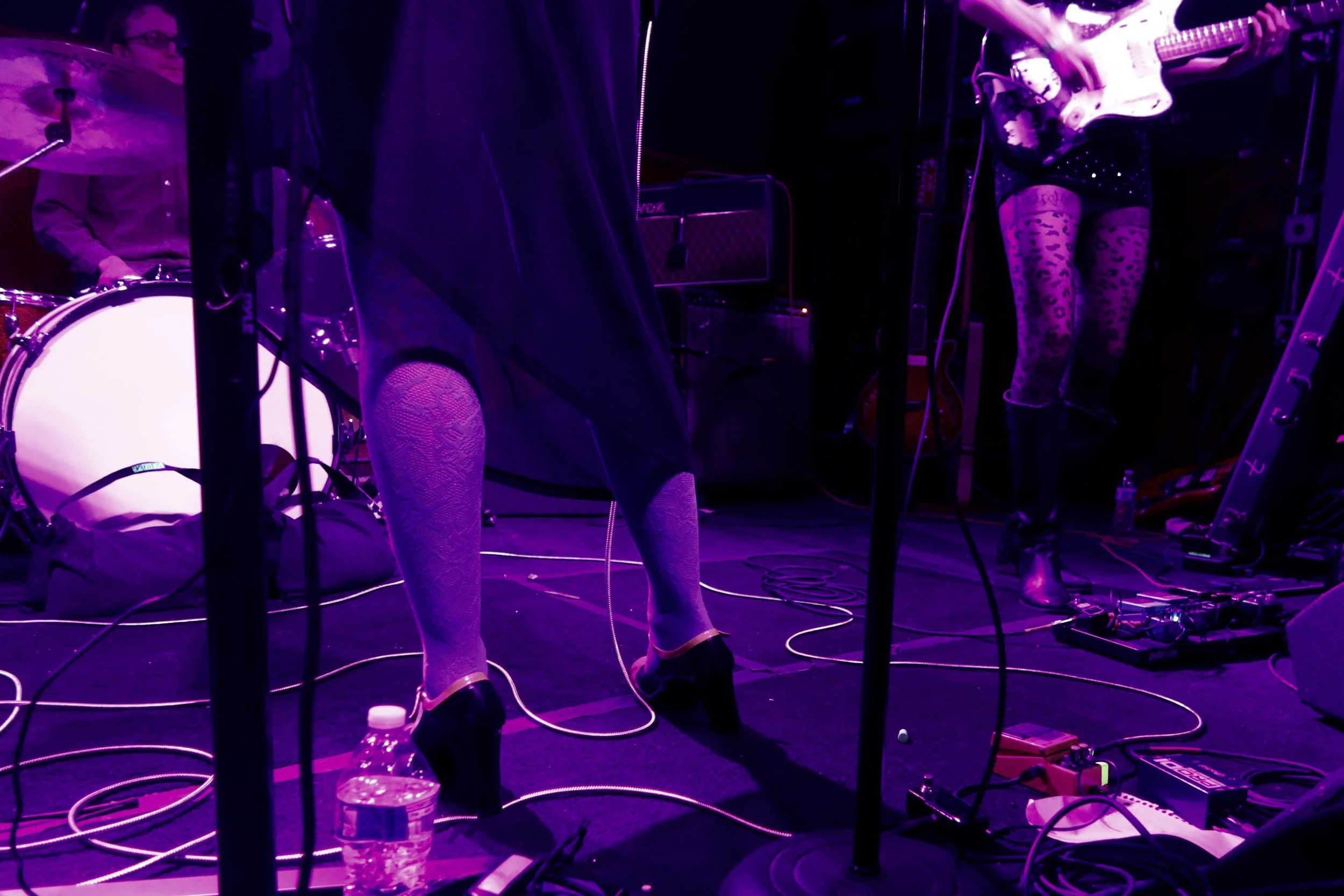
Prior to the concert, I had listened to Sword II’s newest album Electric Hour. My favorite songs were “Disconnection” and “Sugarcane,” for their infectious choruses and distorted, layered elements. Dubbed simply as “indie-rock” by Pitchfork, and more creatively as “phantasmagoric post-punk” by NME, Sword II refuses to be categorized not just sonically, but socially. With free zines on the back table, Zuko encouraging fans to stage dive (several accepted the challenge), González throwing her heels off mid performance when one of them broke, and the band’s preface to the last two songs being anti-police, Sword II has an undeniable punk ethos, but none of the traditional sound or energy. While Zuko kept motioning the audience to form a circle pit, most people were happy simply jumping around in place or shoving each other in waves. While much punk music is stereotypically heavy and male-lead, Sword II is egalitarian in its sharing of the lead singer role and sugary sweet in its weaving of melodies, giving each song a greater dimension and range.
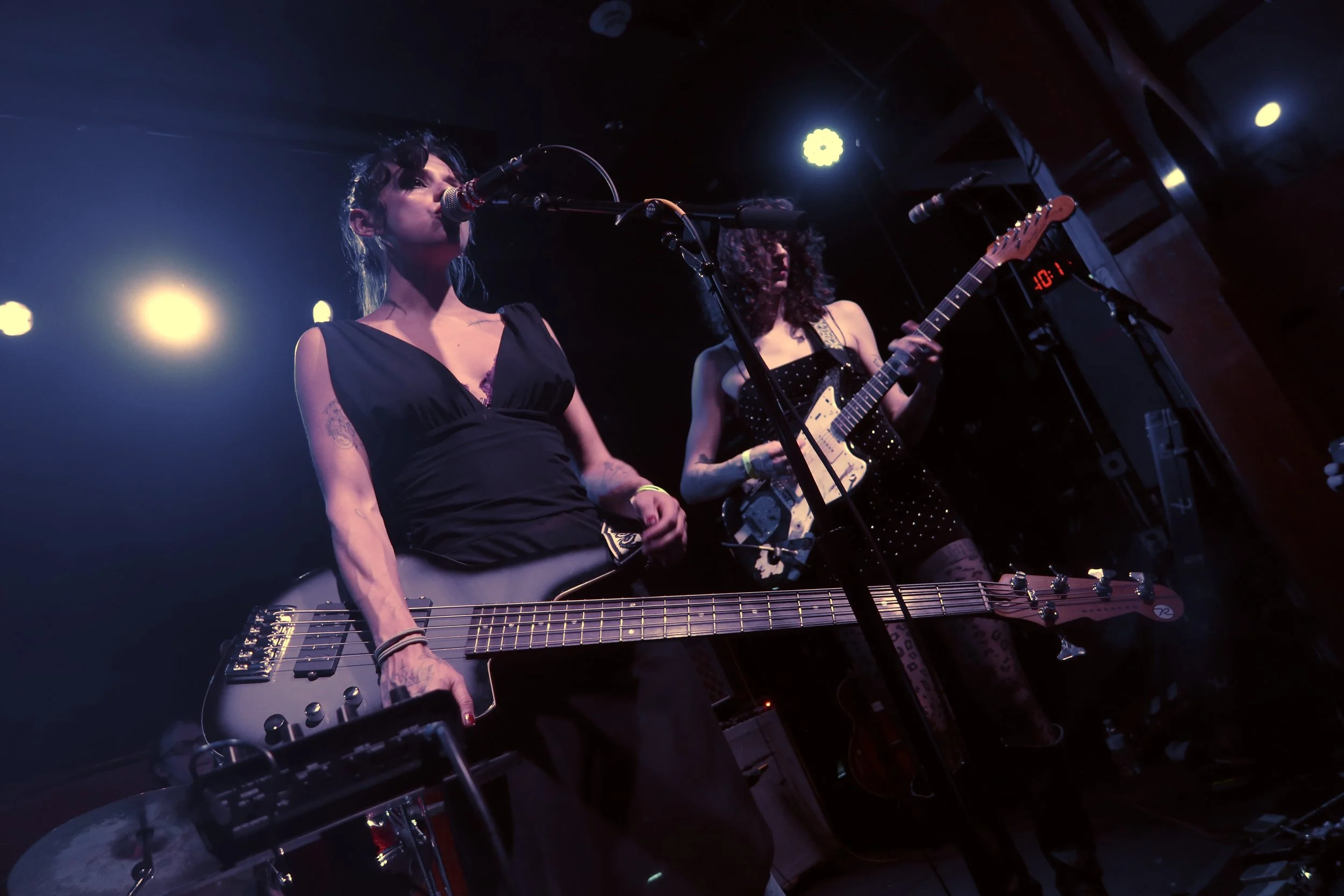
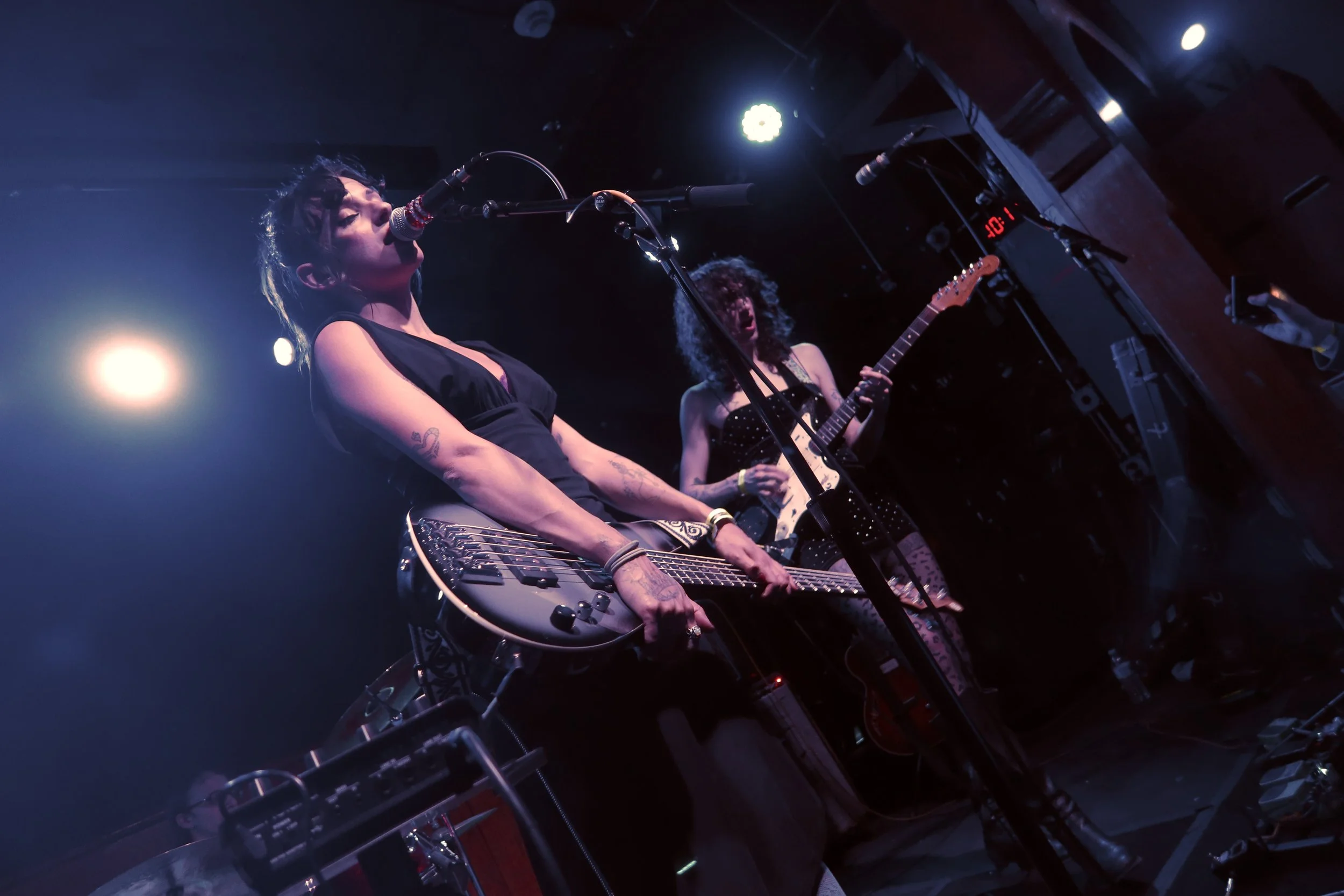
Like Con and Total Wife, Sword II had immaculate chemistry: you could not only see it on stage, but in the vocal compliment and harmony. The band didn’t just foster community among themselves, but among fans. They stayed late taking photos and autographs, and just chatting. It restored much faith I had lost in indie scenes taken over by performative punks, celebrity chasers, and insular individuals.
While Sword II is undeniably new and exciting in recorded form, their live show reveals dedication to community engagement and the punk spirit that even the “punkest” lack. Their uncategorizable, yet widely appealing sound doesn’t ring hollow like many pop acts of today. Instead, they perfectly, and inclusively balance a skilled and engaging medium with a raw and much needed message. Chicago loves you too, Sword II.
edited by Ezra Ellenbogen.
photos by Mimi Mikhailov.