
Nick Drake is everywhere. His influence has diffused into musical culture, his style being passed down like genes from generation to generation. And Volkswagen, of all things, sparked his mainstream status with a 1999 commercial.
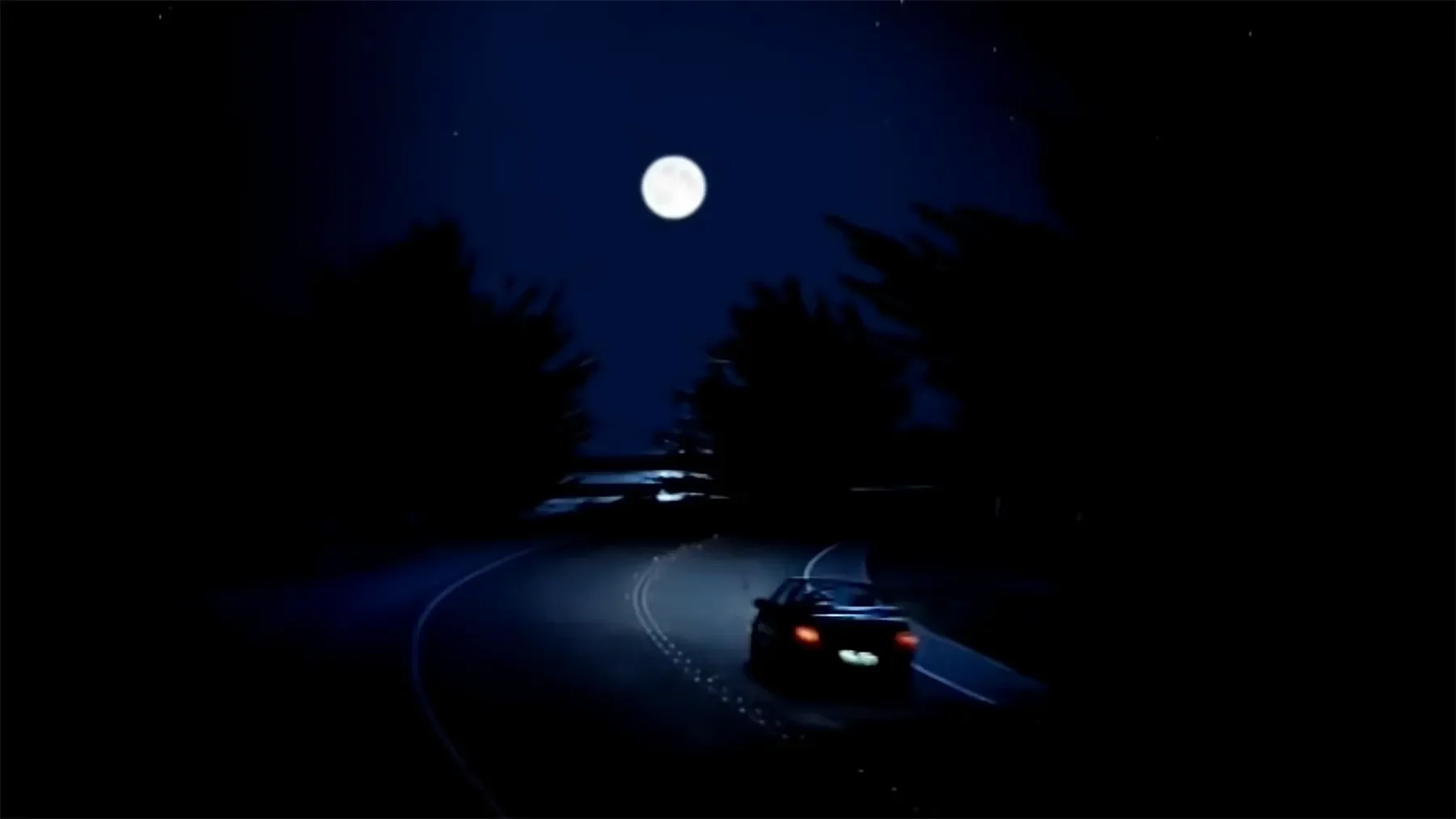
photo from Volkswagen advertisement, 1999.
TV and film are closely tied to music. Take “Running Up That Hill” and its Stranger Things-induced resurgence, or how a McDonald’s ad and Zach Braff movie brought The Shins to the masses with their uses of “New Slang,” or “You Don’t Own Me” increasing in popularity after a Calvin Klein ad campaign. Visual media can help spotlight music, and has a special way of giving old music new fans and new life.
Nick Drake was unknown and underappreciated in his lifetime, but his three albums left an incredible impact, inspiring many current musicians. Gracie Abrams, for example, credits Elliott Smith as inspiration, who drew his own inspiration from Nick Drake, as did Bon Iver, who has collaborated with Taylor Swift. Philip Selway and Thom Yorke of the massively influential Radiohead acknowledge Nick Drake’s influence, and Robert Smith named The Cure after a lyric in the Nick Drake song “Time Has Told Me,” which Smith performed live on one occasion. In turn, Olivia Rodrigo, The Killers, Slowdive, and many others cite The Cure as inspiration. Peter Buck of REM also credits Nick Drake as an influence, and Joe Boyd, Nick Drake’s mentor and producer, also worked with REM—and, of course, REM went on to influence countless other bands, including alt-rock fixture The National. The family tree could go on. Nick Drake is everywhere. His influence has diffused into musical culture, his style being passed down like genes from generation to generation. And Volkswagen, of all things, sparked his mainstream status with a 1999 commercial.
During his career, Nick Drake avoided performing live and struggled with promoting his music. Therefore, the use of “Pink Moon” in a commercial raises ethical questions. Nick Drake’s reclusiveness was most likely rooted in his depression and worsened after a disastrous live performance. He wasn’t necessarily anti-commercial, and Joe Boyd speculates that Drake would have been happy with the commercial. Some view Volkswagen’s use of the song as exploitative. After all, Nick Drake could not receive payment for his work, and he didn’t have agency in the decision to license it. He was also known never to compromise his art, being determined to make his music as he wanted, even if it was met with a lukewarm reception. His final album was delivered without ceremony to his label. He dropped off a tape and a note, and that was it. It was twenty-eight minutes of Drake and his guitar, with an overdubbed piano track for the titular “Pink Moon.” Because of the personal nature of the record, it being used without his permission after death did not sit well with many people.
The point is—and this is speculation from someone who, obviously, did not know Nick Drake—Joe Boyd is probably right, and Drake would have loved the commercial. The VW ad didn’t use “Pink Moon” to tie the brand to a famous song and piggyback off existing popularity, but instead because one of the creators had Nick Drake’s albums in his personal collection and suggested that song for the ad. They used “Pink Moon” because it was a beautiful song and they appreciated it, and then it spread to the wider public. Even if he had lived to see the commercial and license the song, I wouldn’t consider it “selling out.” Music is, after all, a business, and “Pink Moon” used Volkswagen to gain fame more than VW used “Pink Moon.”
According to Bethany Klein in her book As Heard on TV: Popular Music in Advertising, the ad’s “artistic power arguably outweighed its selling power.” Nick Drake CDs were sold with stickers saying “as featured in the VW ad,” and Volkswagens were not bought with stickers saying “as featured with the Nick Drake song.” However, Volkswagen used “Pink Moon” to redefine themselves as a hip and artsy brand, so they did, of course, benefit from it. Beyond its effect on Nick Drake’s music, the so-called “Milky Way” ad marked a shift in discourse. After its release, advertisers saw music in commercials as more of an artistic opportunity, and the public opinion softened and came to accept this use of music. With the success of their commercial, Volkswagen proved that advertising could be art, changing the commercial world.
More than twenty years after his death, Nick Drake became famous and beloved. Terms like “born in the wrong generation” or “ahead of his time” often get thrown around, but here, they really apply. In his song “Fruit Tree” from his first album Five Leaves Left, Nick Drake predicts his legacy. “Safe in your place deep in the earth / That’s when they’ll know what you were really worth./ Forgotten while you’re here/ Remembered for a while/ A much updated ruin/ For a much outdated style.” His music was brought out of obscurity, and people loved it. Across decades, Nick Drake has spoken to music lovers. “Fruit Tree” reads almost like a prophecy—his music was updated even though it seemed outdated, and popular culture finally saw Nick Drake’s worth.
Unlike some musicians and bands whose careers were cut short by tragic deaths, Nick Drake was not growing in popularity. He wasn’t at the very edge of a mainstream breakthrough. He was, in his words, forgotten while he was there. In his time, in an odd transition between jazz and rock, he flew under the radar. The quiet man with his cryptic, haunting lyrics and unusual guitar playing went unnoticed. The fact that his musical style influenced so many famous musicians in later generations goes to show how ahead of his time he was. Thanks to Volkswagen, he isn’t just your favorite artist’s favorite artist, but is relatively mainstream. Before the commercial, he had “cult status” among those in the know, but his record sales were low. After the commercial, he jumped in popularity and record sales rose. As Joe Boyd put it, “maybe the fact that Nick wasn’t popular at the time made him not of the time.” Nick Drake belongs to more now than he did then. He is a pillar of current musical culture, making him a core figure of our time.
edited by Ryan D’Urso.
photo from Volkswagen advertisement, 1999.