
Glaive Makes A Goal With "Y'all"
Creative ambition, the early 20s experience, and polo jerseys.
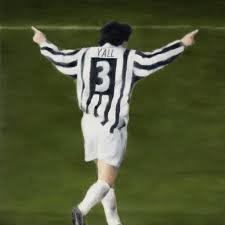
Despite my longtime engagement with the hyperpop community, I didn’t listen to much Glaive. I grouped him with the less interesting digicore-cloud-rap fusion artists until his third album Y’all dropped in late 2025. People all over my Instagram feed were talking about it, so I checked it out without any expectations and came to stream it 100 times in a week. The record’s hard-hitting dance beats and intricate synth patterns instantly pulled me in, demanding I listen on loop while walking to the store, riding the bus, and all throughout my day. Being of the same age as the artist, I can’t help but interpret Y’all as a time capsule of the early life of an ambitious creative trying to understand their place in the world.
With the sports theme of the album, Glaive pays homage to his father and grandfather, both professional polo players. The promotional content is shot like an ad for athletic wear or an energy drink with slow, black-and-white cuts and water droplets falling over sweaty faces. Glaive often wears jerseys and athletic jackets during concerts. The album concept itself introduces a tension between his real life and one he could have pursued in his father’s footsteps. “It is what it is, you must accept it while you can, though/I could've played, I could've balled just like my dad,” he sings in “It Is What It Is,” a track that reflects on who he could have been and on the success he has attained as a musician instead. “If I said it, then I meant it, if I meant it, then it's done,” he says in the first verse, conceding that what has happened cannot be changed, still in an authoritative tone.
Much of Y’all is emblematic of the late-teens and early-20s experience—being ambitious, anticipating the future, and constantly wondering “what if.” Glaive’s lyricism is pointed, honest, and blunt, bridging an intimate confessionality and public grandiosity. In the spirit of the title, he distances himself from “y’all,” or people that he deems below him. “I’d rather kill myself than end up anything like y’all,” he sings on “Vendi Vidi Vici” a track he claims is inspired by “LA people.” In the track, he conveys a disinterest in living a shallow and self-centered celebrity life or throwing others under the bus to get ahead. On “Appalachia,” he sings: “Humble myself for the Lord, coulda ended up like y'all/But my mama raised me better, father said that less is more.” He contrasts his success with with the mundanity of his hometown, echoing the spirit of 2021 track “Fuck This Town.”
Nevertheless, the album is still dense with moments of insecurity and contemplation of where he is to go from there on out. “Every single time I'm home I think about doing some things that I should not say in a song,” he confesses in the opening track “Asheville.” In “We Don’t Leave The House” he sings “I don't really go to clubs, get scared around the drugs/Get scared that I'll do something I probably shouldn't have done.” He conveys distrust in himself and admits to the precariousness of his current standing in life. This adds another layer of intrigue to the title. While Glaive expresses contempt toward naysayers and those less successful than him, he does not completely trust his own judgment and behavior, either. He separates himself from “y’all,” but at the cost of his security. Showing off his achievements in some ways comes off as more desperate given this context, rendering the album more authentic and relatable.
Sonically, the album is split into hype, high-energy bangers and more subdued, heartfelt indie-pop tracks. Songs like "Foreigner," “We Don’t Leave The House,” and “Appalachia” feature the electroclash-hyperpop fusion sound that has taken over the electronic music sphere. “We Don’t Leave The House,” one of my most-played tracks from the album, is filled with looped synth patterns and a dance beat, not unlike “Appalachia”’s high-pitched, playful arps and persistent kicks that drive the beat forward. The other half of the album is more heartfelt and acoustic. “Bluebirds” is driven by a simple pop beat and keys, and sweet guitars are crucial to “i love you and it sounds stupid” and “Bennie and Kay.” “Crying, Laughing, Loving, Lying” strikes a middle ground between these hemispheres: “I just need to relax/But I just fucking can’t” glaive repeats in the track, tempering the complications of being in love with chill dance production.
I can’t help but draw similarities between Y’all and hypochondriac by brakence. The latter is one of my favorite albums. They share much more than a few threads of similarity in terms of theme and style. Both albums boast pop-rap versatility and blunt, emotional lyrics, conveying a cathartic 20-year-old angst that borders on corniness. High in dynamism and versatility, they contain moments of experimental production that toe the line between listener-friendly pop and weird stuff you wouldn’t dare to play around your friends. They teem with a desperation to prove oneself and the frustration of being misunderstood and compartmentalized, often turning existential and self-critical.
Overall, Y’all feels harshly split between the upbeat and tender modes. The hype songs feature hyper-processed vocal production, glaive’s mumbly intonation complementing the high-velocity electronic beat. The calmer pop songs are less interesting and more difficult to tell apart. I find myself needing to listen to more songs off the album when one of them comes on shuffle—each song feels like it depends on the rest of the album to justify it. Regardless, Y’all is a good stab at commemorating a moment in Glaive’s life and is, most importantly, wholly enjoyable, justifying streaming it 100 times.
edited by Celeste Alcalay.
album artwork believed to belong to either the publisher of the work or the artist.
