On Tigray Funk, Sideshow turns addiction, violence, politics, and death into a dark fable about predators, prey, and whether we can ever break the cycles that make us both.
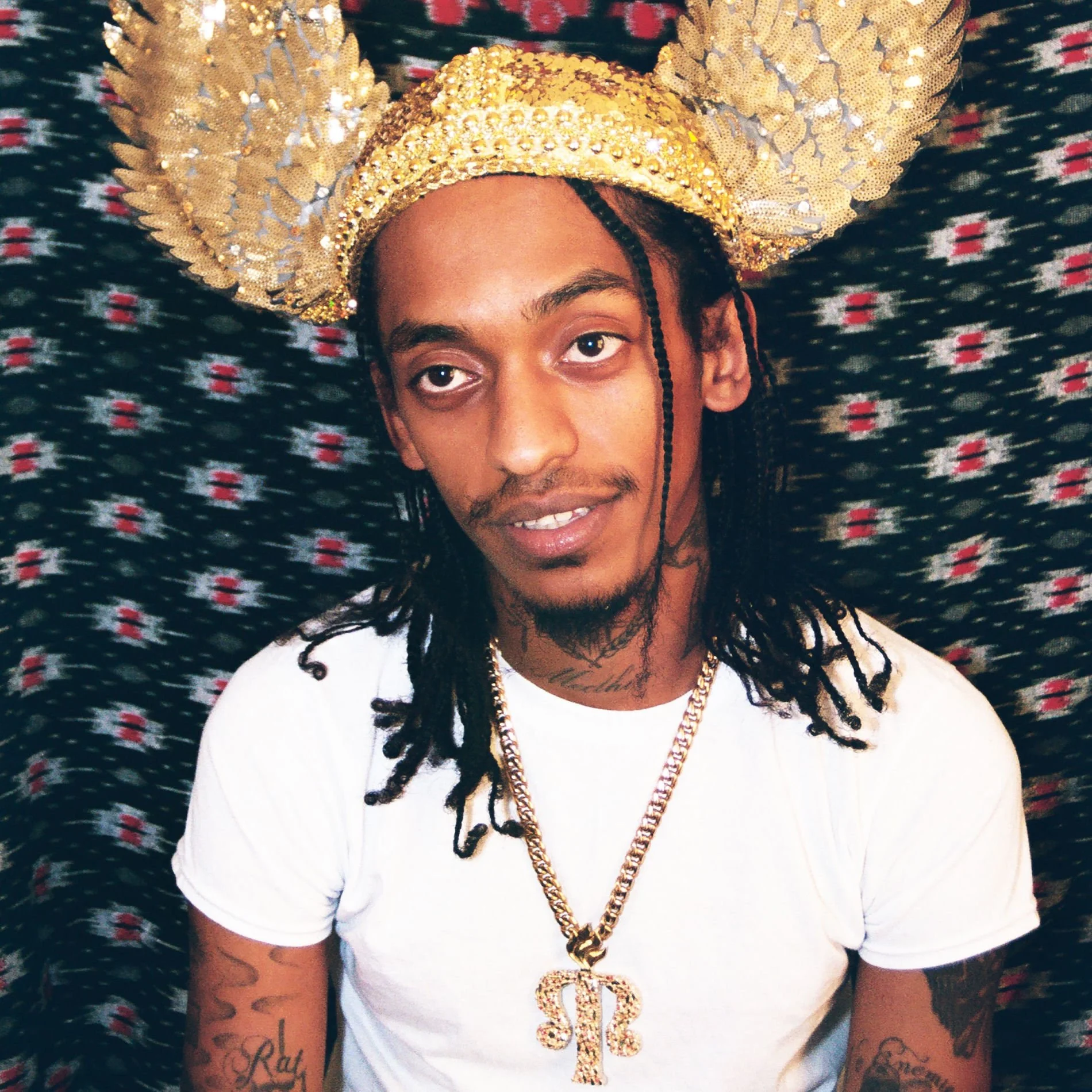
One reason I love nature documentaries is that no matter how unique or foreign they seem, they tell a tale as old as time–the relationship between predator and prey. While humans could never truly experience the thrill of being a gazelle chased by a lion, we can relate. We are all familiar with the predatory cycles that infiltrate our daily lives, whether it be cycles of addiction, the powerful exploiting the powerless, or death. In the alternative hip-hop album Tigray Funk, the seventh project by 10k Global rapper Sideshow, he provides vulnerable, honest narrations of his own life experiences to come to an understanding of how the relationship between predator and prey is incorporated into our daily lives.
HaileMariam Kassa, who raps under the name Sideshow, is a distinctively DMV (DC, Maryland, and Virginia) rapper who, after residing in Los Angeles for some years, recently relocated back to the DMV. This migration is reflected in Tigray Funk, as his style of rapping uniquely blends contemporary sounds from both the DMV and Los Angeles rap scenes. Additionally, he was born in Ethiopia, belonging to the Tigray tribe, and spent the first few years of his life there. The album’s name, Tigray Funk, is a direct reflection of this background.
I must admit that on my first listen, I was a bit wary of the album's structure. When I learned that it would be a 4-disc, 32-song, 62-minute-long album, I was surprised. I had known Sideshow to release concise albums with brief songs, so I was nervous that he wouldn’t be able to maintain the intensity and substance that I’ve grown accustomed to. However, I can now confidently say that the unorthodox album structure only contributed to the strength of the album, making for a notably entertaining listening experience.
Upon listening to the album, I was immediately shocked by the production. It was glitchy, aggressive, and eccentric, with hints of nostalgia and somberness. The strength and individuality of the production were expected, as Sideshow brought a vast crew of proven producers, such as Tony Seltzer, SURFGANG, randomblackdude (Earl Sweatshirt’s producer alias), and many more, together to develop the album. Despite the idiosyncratic production, Sideshow somehow found a way to flow and excel on them effortlessly. Additionally, Sideshow employs SEXWORKS, Kelow LaTesha, El Costeau, and Niontay as features. I appreciated that each feature subtly adds to its respective song rather than taking it over, demonstrating Sideshow’s ability to curate intentionally rather than using features as a crutch.
Despite the longer tracklist, Tigray Funk is thematically concise. Throughout the album, Sideshow consistently discusses predatory cycles such as drugs, violence, politics, and death. He executes this through rapping with impressive vulnerability. Listening to him speak about how each theme plays into his life with such honesty, I couldn’t help but get emotional. Each song on the album is crucial in painting the dark masterpiece that Sideshow presents. On the song “ALENA(ኣለና)PARADISE LOST,” Sideshow brings attention to the issues of white supremacy and wealth inequality and their contribution to the violence that he finds himself surrounded with, rapping, “Rich get richer while the poor get they wage cut/Make us killers just so they can keep us caged up.” Sideshow makes similar objections to the status quo in the political state of the world on “LOOK WHAT OUR STOMACHS MADE US DO” rapping:
From Tigray to Palestine, we facin' cold facts
If you not white with blue eyes, your suffering don't matter
They tryna wipe us out, they scared we gon' surpass 'em
We witness gеnocide and pray, I swear we movin' backwards
On other songs, such as “A LOVE NARCOTIC” and “MY CHEMICAL ROMANCE,” Sideshow becomes scarily honest as he raps about his relationship with drugs, specifically his addiction to lean. On songs such as “3EEP IT 2OGETHER” and “VOLUME METRIC,” Sideshow speaks about his fear of death and his experiences of the loss of people close to him. In all of these, a clear pattern is shown. Sideshow presents the vicious cycles of life and how these cycles impact him and his peers.
Another key aspect of the album that Sideshow uses to develop the themes of the album is the five skits scattered throughout. Together, they develop a story of how dogs became man’s best friend. During my first listen to the album, this storyline confused me. I failed to see how it tied back to the main themes, ultimately seeming random. My curiosity as both a fan and a reviewer led me to dig more into these skits. After more listens, close reads, and Reddit digging, the storyline came together. The story was told like a scary fable that may be told to children around a campfire at night. The story explains how certain animals became predators and prey, while dogs became man’s best friend. These animals were to come together to build a shelter and live peacefully amongst one another. Instead, laziness and selfishness divided the animals as they sought to achieve more while contributing less to their community. Through this dynamic, a hierarchy of animals developed. Certain animals became predators and prey. Additionally, this story demonstrates a constant cycle of violence, as each animal seeks to topple the others. By adding such a story, Sideshow can pair his narrations of the vicious cycles of violence and drug abuse that surround him with a simple tale that closely mirrors such a pattern.
Regardless of the serious subject matter, Sideshow includes creative, quotable bars. One that immediately stood out to me is on “CHAOS CONSTANT”, where Sideshow references Will Smith slapping Chris Rock at the Oscars, rapping, “If I was Will, I would’ve smacked Chris with a Smith.” While more obviously referring to the name Will Smith, Smith also refers to the gun brand Smith & Wesson. Another that immediately stuck out is on “A LOVE NARCOTIC”, where he raps, “I got a micro and a microphone, with either, I don't miss.” On “LIFES AS VIOLENT AS YOU MAKE IT,” Sideshow raps, “My pockets is fat like a ass on a midget.” Such lyrics demonstrate Sideshow’s insane level of wordplay and wit.
My favorite moment in the album is at the end of “LIFES AS VIOLENT AS YOU MAKE IT.” He includes an interview with an African politician, one who has appeared on my social media numerous times and has been a cause of many laughs. In the interview, the man declares, “Corruption is not bad/Corruption is only bad if I'm not involved, but if I'm part of that corruption, I'll defend it.” When I first heard this inclusion, I was taken aback, as I would never have expected such an interview to be in this album. However, its inclusion is prudent, as it depicts the cycle of corruption and furthers Sideshow’s discussion of the world’s many vicious cycles.
Despite its somber lyrical content, Tigray Funk still serves to bring hope. On the first two songs of the album, “SIGNS AND SYMBOLS” and “KILL FROM THE HEART,” Sideshow ends by expressing “Heaven is on Earth.” This invites a unique proposition. Despite the vicious cycles that oppress us, we can still experience Heaven on Earth. Rather than just accepting these vicious cycles, we can work together to fight against them. Maybe if the animals from the skits were to work together rather than be selfish and seek to dominate each other, then we would not have predator and prey – just equals.
edited by Alex Fuentes.
album artwork believed to belong to either the publisher of the work or the artist.